

1.5 Billion Waste Tyres a Year—and a $3.84 Billion Market Rising to Process Them
More than 1.5 billion waste tyres are generated globally every year. The WHO estimates approximately one billion tyres are discarded annually, and as vehicle ownership continues to grow across Asia, Africa, and Latin America, that number rises with it. End-of-life tyres cannot be landfilled safely—their bulk, chemical composition, and tendency to trap gases make them hazardous in landfill environments, and open burning releases a toxic mix of polycyclic aromatic hydrocarbons, dioxins, and particulate matter. The result is a waste stream that accumulates faster than conventional disposal infrastructure can handle it and that regulators in most major markets are actively legislating against.
Pyrolysis-based tyre recycling plants have emerged as the dominant industrial response. The global waste tyre pyrolysis plant market was valued at USD 1.97 billion in 2026 and is projected to reach USD 3.84 billion by 2035, growing at a CAGR of 7.7% over the forecast period. review the full waste tyre pyrolysis plant market analysis and forecast. Over 3,500 operational tyre pyrolysis plants were registered worldwide in 2024, and commercial project announcements from Michelin, BASF-backed ventures, and BMW Group recycling partnerships confirm that this technology has moved well beyond the pilot stage into mainstream industrial deployment. Understanding how a modern tyre recycling plant functions—and what it produces—is the starting point for any operator or investor evaluating entry into this market. The pyrolysis equipment range for waste tyre and plastic processing covers the full spectrum of reactor configurations used in commercial plant deployments today.
Content
A tyre recycling plant based on pyrolysis technology applies controlled thermal decomposition to shredded or whole waste tyres in an oxygen-free environment. In the absence of oxygen, combustion cannot occur. Instead, the heat—applied at temperatures typically between 400°C and 600°C—breaks the long polymer chains in the tyre rubber into shorter hydrocarbon molecules that volatilize, condense, and separate into commercially usable output streams.
The tyre itself is a complex composite material. A passenger car tyre contains approximately 47% rubber compounds (natural and synthetic), 22% carbon black as reinforcing filler, 16% steel cord and bead wire, and 15% textile and other additives. Pyrolysis does not destroy this material—it separates it. The rubber fraction thermally decomposes into oil vapors and combustible gas. The carbon black is recovered as a solid residue. The steel cord survives the thermal process intact and is recovered as recyclable metal. Every major constituent of the original tyre re-emerges from the pyrolysis reactor as a usable material rather than a disposal problem.
This distinguishes pyrolysis from the two other main approaches to tyre waste management. Mechanical grinding—producing crumb rubber for playground surfaces, sports fields, and asphalt modification—retains the tyre's material composition but provides limited value per tonne compared to pyrolysis outputs. Cement kiln co-processing burns tyres as supplemental fuel but destroys the material value of the carbon black and generates the emissions that modern recycling frameworks aim to minimize. Pyrolysis is the only currently scalable approach that recovers both the energy value and the material value of end-of-life tyres simultaneously. The broader context of how this technology is reshaping waste management is examined in the rise of waste tire pyrolysis machines in modern recycling.
A complete tyre recycling plant integrates three major processing stages in sequence. Each stage has its own equipment requirements, operational parameters, and output specifications, and the performance of the overall plant depends on how well these stages are configured and coordinated.
Stage 1: Pre-processing and shredding. Whole tyres must be reduced to smaller pieces before they can be fed into a pyrolysis reactor efficiently. Whole-tyre reactors exist but are limited in throughput and thermal efficiency; shredded feed material offers faster and more uniform heating throughout the reactor chamber. The industrial waste tyre shredder for pre-processing feed material reduces whole tyres to chips typically between 30 and 50 mm in size—the optimal range for reactor feed in most commercial pyrolysis configurations. Steel bead wire removal before shredding extends shredder blade life and simplifies the downstream steel recovery process. The full range of pre-processing solutions for feed preparation is covered in the tyre shredder range for recycling plant feed preparation, as well as in a detailed tire shredders guide for tyre recycling machine selection that examines shredder specifications for different plant throughputs.
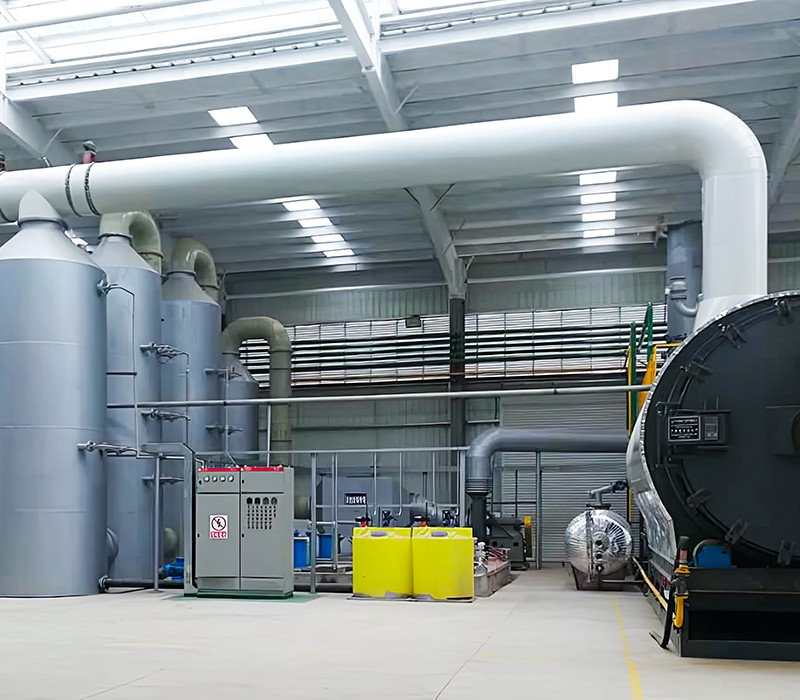
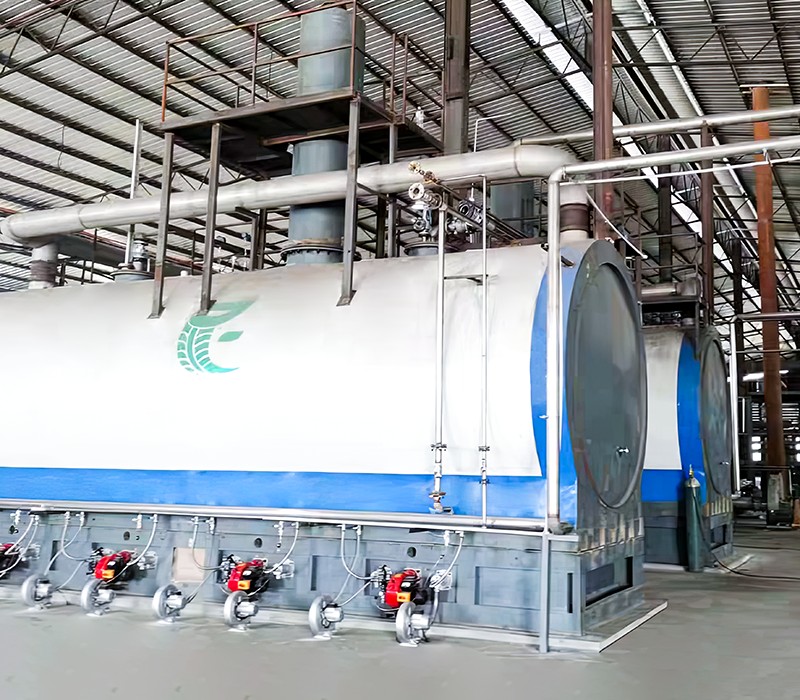
Stage 2: Pyrolysis reaction. The shredded tyre material is fed into the pyrolysis reactor—a sealed, externally heated chamber from which oxygen is excluded either by sealing and purging with inert gas, or by the material itself displacing oxygen from the chamber during loading and startup. The reactor heats the feed material from ambient temperature to the target pyrolysis temperature, typically 400–600°C, at a controlled ramp rate. As the rubber fraction decomposes, oil vapors and non-condensable gases exit the reactor through the vapor outlet and pass into the downstream condensation and separation system. The remaining solid material—carbon black residue, steel wire, and any inert fillers—remains in the reactor and is discharged after the cycle completes.
Stage 3: Output separation and recovery. The vapor stream from the reactor passes through a condensation system—a series of heat exchangers and condensers—where the heavier hydrocarbon fractions condense into liquid pyrolysis oil and are collected in storage tanks. The lighter fractions that do not condense at ambient conditions form the non-condensable combustible gas stream, which is typically recycled back to the reactor burner system to supply part of the process heat requirement, reducing external fuel consumption. The solid residue discharged from the reactor is processed through magnetic separation to recover the steel wire fraction, and the remaining carbon black powder is collected for upgrading or direct sale.

The most consequential equipment decision in a tyre recycling plant project is the choice between batch and continuous pyrolysis configurations. Both process the same feedstock and produce the same output streams, but they differ fundamentally in how material moves through the reactor, what throughput levels they are suited to, and how they match different investment profiles and operational requirements.
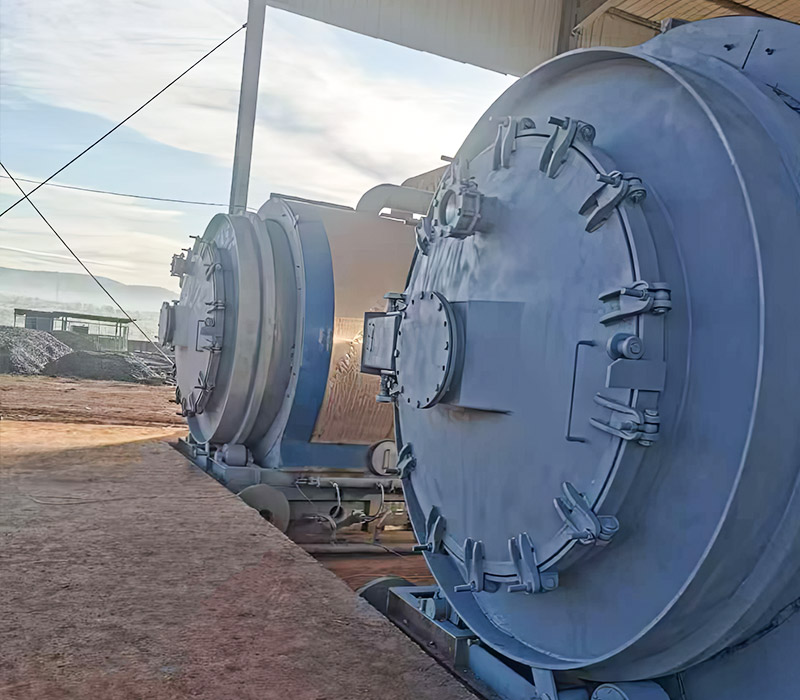
Batch pyrolysis plants load a fixed quantity of feed material into a static reactor, seal the reactor, complete the pyrolysis cycle, cool the reactor, discharge the solid residue, and then reload for the next cycle. Each cycle typically takes 8 to 12 hours including loading, heating, reaction, cooling, and discharge. Batch reactors are mechanically simpler, have lower initial capital cost, and are well-suited to operators entering the market at smaller scales—typically 1 to 10 tonnes per cycle—or to sites with variable feedstock availability that makes continuous feeding impractical. The waste tyre to oil batch pyrolysis plant for flexible capacity serves this segment, providing a practical entry point for operators building operational experience and market access for outputs before committing to larger-scale continuous processing.
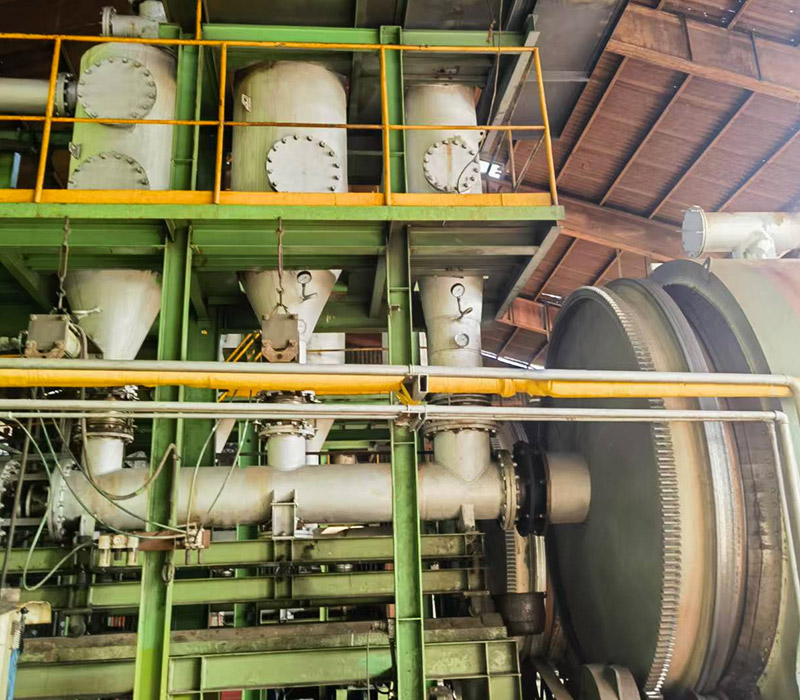
Continuous pyrolysis plants feed material into and discharge residue from the reactor in an uninterrupted flow, maintaining steady-state thermal conditions throughout operation. The reactor operates at a stable temperature continuously rather than cycling through heating and cooling phases, which significantly improves thermal efficiency—the energy input per tonne of feed processed is substantially lower than in batch systems because the reactor wall and internal components are never cooled between cycles. Continuous reactors are designed for high-throughput operation, typically 10 to 50 tonnes per day per reactor, and are the standard configuration for commercial-scale recycling plant projects. The waste tyre to oil continuous pyrolysis plant for large-scale operations is engineered for sustained high-volume throughput with automated feed and discharge systems that minimize labor requirements and maximize plant availability. The operational advantages of continuous systems at production scale are covered in detail in continuous pyrolysis equipment turning waste into energy.
For operators scaling from pilot to commercial operation, a phased approach—beginning with batch capacity to establish feedstock supply, operational procedures, and output market relationships, then adding continuous capacity as throughput justifies the investment—is a lower-risk path to full-scale commercial operation than committing to continuous plant infrastructure before the site's logistics and market channels are fully validated.
The economic viability of a tyre recycling plant rests on the combined value of its four output streams. Each stream has its own market, quality specification, and value-enhancement pathway, and the plant's profitability is directly tied to how effectively each stream is captured, processed, and sold.
Pyrolysis oil (approximately 40–45% of feed weight). The primary revenue stream for most tyre pyrolysis plants. Tyre-derived pyrolysis oil has a calorific value comparable to light fuel oil and can be used directly as industrial heating fuel in cement kilns, steel furnaces, and power generation boilers. Its value increases significantly when it is upgraded through distillation into diesel-range fuel fractions. The waste oil distillation equipment for pyrolysis oil refining separates the crude pyrolysis oil into lighter distillate fractions with narrower boiling ranges and lower sulfur and aromatic content, producing fuel products that command premium pricing over crude pyrolysis oil in fuel markets. The atmospheric and vacuum distillation plant for pyrolysis oil handles the full distillation process, from crude tyre-derived oil to separated diesel, gasoline, and heavy fuel fractions. Global demand for tyre-derived pyrolysis oil increased by 17% between 2022 and 2024, reflecting both rising energy prices and growing regulatory acceptance of pyrolysis oil as a circular economy product.
Recovered carbon black (approximately 30–35% of feed weight). The solid residue recovered from the pyrolysis reactor after steel separation contains carbon black—the same reinforcing material that was used in the original tyre compound. Recovered carbon black (rCB) from tyre pyrolysis has a structure and surface chemistry similar to commercial carbon black grades used in rubber compounding, plastics, and pigment applications. However, crude rCB also contains ash, metals, and residual organic compounds that reduce its performance relative to virgin carbon black. Upgrading through grinding, pelletizing, and thermal treatment—which burns off residual organic contaminants and improves surface area and structure—produces rCB that can substitute for virgin carbon black in tire manufacturing and rubber compounding at significant cost savings. The recovered carbon black processing equipment for rCB upgrading performs this post-processing, converting crude reactor residue into a specification-grade product that qualifies for the premium rCB markets where the highest commercial value is realized.
Steel wire (approximately 10–15% of feed weight). The steel cord and bead wire in tyres survives the pyrolysis process intact. After magnetic separation from the carbon black residue, the recovered steel is typically sold to steel scrap markets for remelting. The steel recovered from tyre pyrolysis is clean and free of rubber contamination following thermal processing, which makes it acceptable to scrap dealers without further treatment. While steel wire is not the primary revenue driver in a tyre pyrolysis plant, it contributes meaningfully to overall material recovery economics, particularly in markets where scrap steel prices are strong.
Non-condensable combustible gas (approximately 10–15% of feed weight). The lightest hydrocarbon fractions from the pyrolysis vapor stream—primarily methane, ethane, propane, and hydrogen—do not condense at ambient temperature and are collected as combustible gas. Most pyrolysis plant operators use this gas stream directly as fuel for the reactor heating system, partially or fully offsetting the external energy input required to sustain the pyrolysis temperature. Plants with thermal efficiency designs and good gas recovery systems can achieve near-thermal-neutral operation—where the energy value of the non-condensable gas covers most or all of the process heat requirement—significantly reducing the operating cost per tonne of feed processed.
The growth of the tyre pyrolysis plant market is not purely technology-driven. It is being accelerated by a regulatory environment that is systematically closing off the disposal alternatives that have historically absorbed end-of-life tyres at low cost.
Extended Producer Responsibility (EPR) frameworks for end-of-life tyres are now in force or in advanced development across major markets. India's EPR for Waste Tyre policy, notified by the Ministry of Environment, Forest and Climate Change in 2022, requires tyre producers to take responsibility for the recycling of tyres they place on the market. The European Commission has reported that over 90% of end-of-life tyres in the EU are now processed through recycling methods, driven by the ban on tyre landfilling and the EU End-of-Life Vehicles directive that governs tyre waste from scrapped vehicles. In the United States, 48 states have some form of tyre disposal regulation, and the trend toward recycling mandates over disposal fees is accelerating.
Carbon accounting frameworks are adding a further economic driver. The carbon black recovered through tyre pyrolysis displaces virgin carbon black—a product manufactured from fossil fuel feedstocks with significant carbon intensity. As carbon pricing mechanisms mature in the EU, UK, and increasingly in Asia-Pacific markets, the carbon credit value associated with recovered carbon black production is emerging as a real component of plant revenue modeling, particularly for investors targeting ESG-aligned capital allocation.
For operators and investors evaluating tyre recycling plant projects, the convergence of regulatory closure of disposal alternatives, rising demand for secondary raw materials, and improving pyrolysis technology economics creates a market entry window that is widening rather than closing. The standard plant capacity of 30 to 50 tonnes per day—producing 13 to 22 tonnes of pyrolysis oil, 10 to 17 tonnes of rCB, and 4 to 7 tonnes of steel wire daily—establishes the revenue potential against which project economics are evaluated. At current market prices for pyrolysis oil, rCB, and scrap steel, well-operated plants in markets with reliable feedstock supply and established output channels have demonstrated payback periods of three to five years on initial capital investment, with operating margins that improve as output upgrading capability is added over the plant's service life.






Let's Pyrolysis!


 +44 7529 150720
  [email protected]
  300 meters east of the South Railway Station in Shangqiu City, Henan Province
  Global Waste-to-Energy Solutions Waste Resource Utilization Equipment Manufacturer

 Profit Calculator
 English
 русский
 Français
 Español
 عربى
عربى