PYROJIN

Industry Popular Science

Home / News / Industry Popular Science / Revolutionizing Waste Management: The Rise of Waste Tire Pyrolysis Machines
Industry Popular Science

Revolutionizing Waste Management: The Rise of Waste Tire Pyrolysis Machines

2025-10-11 8 minutes

Content

1. Introduction

1.1 Overview of global tire waste challenges

Every year, the world discards over 1.5 billion tires—a staggering number that translates to a relentless stream of non-biodegradable waste. As global vehicle ownership rises, so does the mountain of end-of-life tires, piling up in landfills, illegal dumps, and stockpiles across the planet. These discarded tires are more than just an eyesore; they represent a persistent and growing environmental crisis, challenging municipalities and waste management systems to find a sustainable solution for their disposal.

1.2 Environmental and economic impact of improper tire disposal

The consequences of improper tire disposal are severe and multifaceted. In landfills, tires consume vast amounts of valuable space and can trap methane gas, causing them to rise to the surface and damage landfill liners. Stockpiled tires become ideal breeding grounds for mosquitoes and other pests, posing significant public health risks. Perhaps most alarmingly, tire fires are notoriously difficult to extinguish, releasing toxic fumes and oils that contaminate air, soil, and water for years.

Economically, the burden of managing this waste falls on governments and communities, involving significant costs for collection, storage, and remediation of illegal dump sites. Furthermore, this linear “take-make-dispose” model represents a colossal waste of valuable resources, locking away materials that could be reintegrated into the economy.

1.3 Emergence of pyrolysis technology as a sustainable solution

In the face of this daunting challenge, a transformative technology has emerged: waste tire pyrolysis. Moving beyond traditional methods like incineration or retreading, pyrolysis offers a truly sustainable and circular solution. This innovative process does not merely dispose of tires; it deconstructs them at a molecular level, converting a problematic waste product into a suite of valuable commodities. By turning waste tires into fuel, carbon black, and steel, pyrolysis technology is revolutionizing waste management, promising to clean up our environment while powering a new, green industry.

2. Understanding Waste Tire Pyrolysis Machines

2.1 What is a pyrolysis machine?

At its core, a waste tire pyrolysis machine is a specialized reactor that thermally decomposes rubber polymers in an oxygen-free environment. The term “pyrolysis” itself is derived from the Greek words pyro (fire) and lysis (separating). Unlike incineration, which burns waste with oxygen, pyrolysis uses intense heat in a sealed, anaerobic setting to break down complex materials into simpler, reusable substances. In the context of tires, this process effectively reverses the vulcanization process, transforming a durable, cross-linked polymer back into its constituent useful components.

2.2 Key components and operation principle

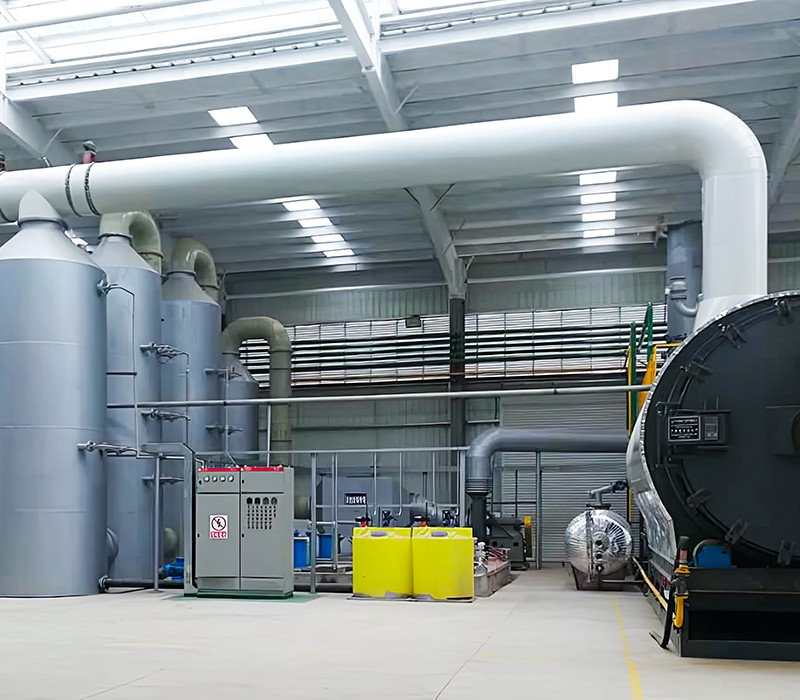
A standard pyrolysis plant is an integrated system composed of several key components working in concert:

  1. Feeding System: A conveyor or automated feeder that introduces shredded tires into the main reactor, often equipped with an air-lock to maintain the oxygen-free environment.
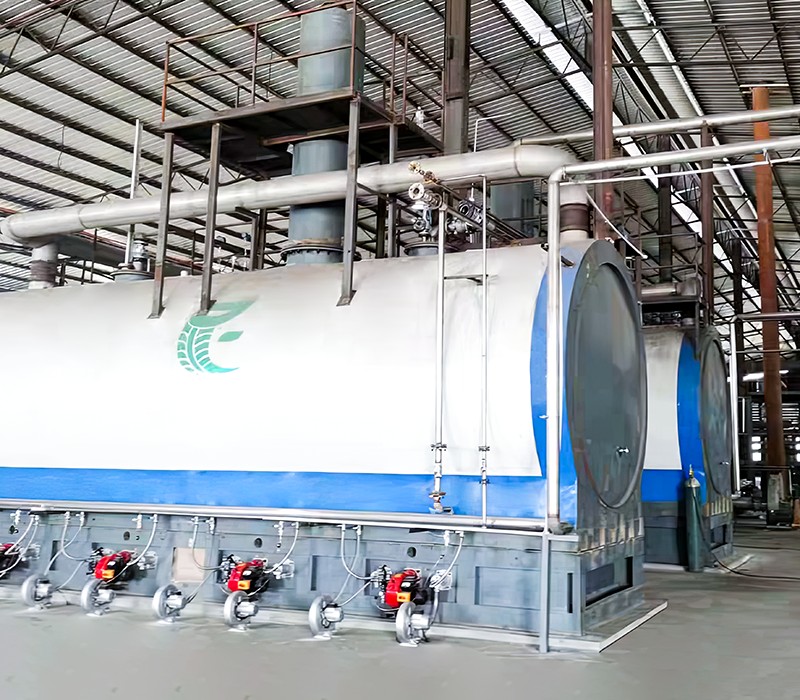
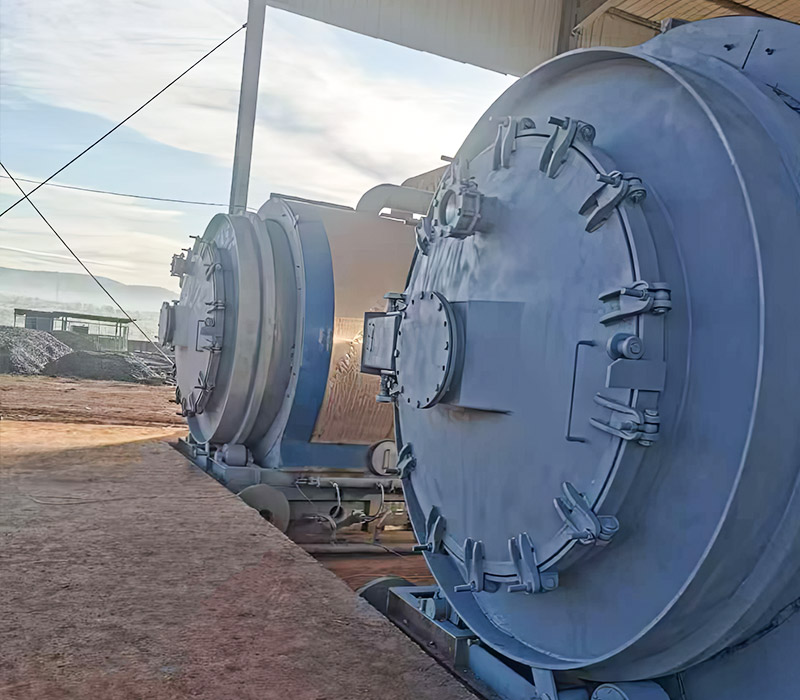
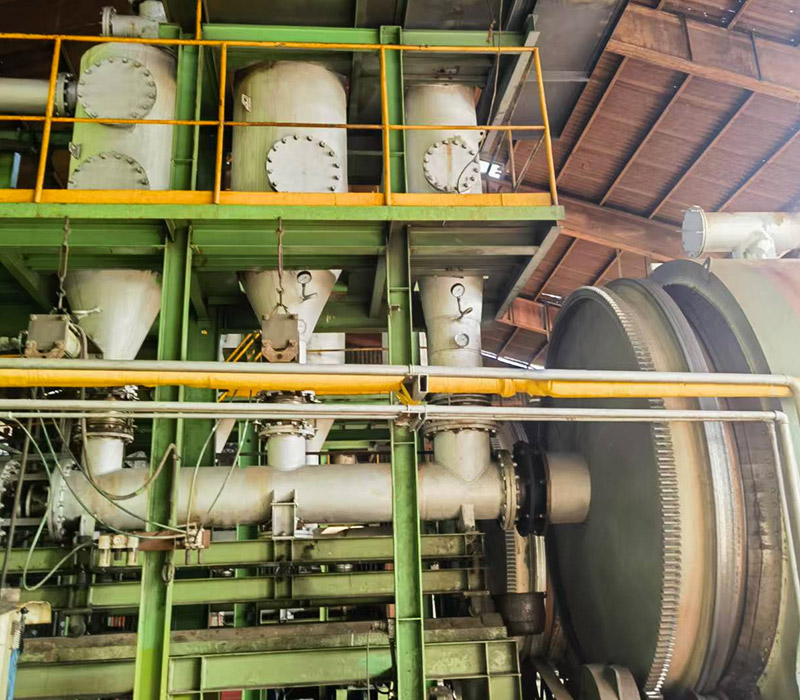
  2. Reactor: The heart of the system, a sealed vessel (often rotary for better heat distribution) where the pyrolysis reaction takes place. It is heated by a fuel source.
  3. Heating Source: A furnace that heats the reactor. Modern systems often use a portion of the produced syngas to fuel the process, enhancing energy self-sufficiency.
  4. Catalyst Chamber (Optional): Some advanced systems include a catalyst to improve the quality and yield of the final oil product.
  5. Condensing System: A series of condensers that rapidly cool the vaporized hydrocarbons released from the reactor, converting them into liquid pyrolysis oil.
  6. Gas Purification and Scrubber System: Cleans the non-condensable syngas to remove impurities and harmful compounds before it is recycled as fuel or stored.
  7. Solid Discharge System: A mechanism to safely unload the solid residue—primarily carbon black and steel wire—after the process is complete.
  8. Emission Control System: Advanced setups include dedusting and desulfurization units to ensure all exhaust gases meet environmental standards before release.

The fundamental operational principle is the application of heat (typically between 300°C and 500°C) in the absence of oxygen, causing the long-chain hydrocarbon molecules in rubber to break down into smaller molecules of oil, gas, and solid carbon.

2.3 Types of waste tires suitable for pyrolysis

Pyrolysis technology is remarkably versatile and can process a wide range of waste tires, making it a comprehensive solution. Suitable feedstocks include:

  • Passenger Car Tires: The most common feedstock due to high volume.
  • Truck and Bus Tires: These yield more steel wire and carbon black per unit.
  • OTR (Off-the-Road) Tires: From mining and construction equipment, requiring pre-shredding due to their massive size.
  • Bicycle and Motorcycle Tires: Also processable, though their smaller steel or fabric content varies.

It is important to note that tires are typically shredded into small chips (2-5 cm) before processing. This increases the surface area for more efficient heat transfer, ensures a more uniform reaction, and facilitates the removal of steel beads and radial belts, which can be separated and sold separately.

3. Process and Output

3.1 Step-by-step explanation of the pyrolysis process

The conversion of waste tires into valuable resources through pyrolysis is a meticulously controlled process that can be broken down into several key stages:

  1. Tire Pre-processing: Whole waste tires are first shredded into small, uniform chips (typically 2-5 cm in size). This step increases the surface area for efficient heating and allows for the mechanical removal of most of the steel beads and radial belts, though some wire remains in the shreds.
  2. Feeding and Sealing: The shredded tire chips are conveyed into the main pyrolysis reactor via an automated feeding system. Once loaded, the reactor is sealed tightly to create an oxygen-free environment, which is critical for preventing combustion and ensuring the pyrolysis reaction occurs.
  3. Heating and Pyrolysis Reaction: The reactor is heated externally by a fuel source (often using the produced syngas once the process is running). As the temperature inside rises to between 300°C and 500°C, the long-chain polymer molecules of the rubber break down under the intense heat in the absence of oxygen. This process vaporizes the hydrocarbons.
  4. Vapor Condensation: The hot, hydrocarbon-rich vapors exit the reactor and travel through a multi-stage condensation system. As these vapors are cooled, they liquefy into a dark, viscous liquid known as pyrolysis oil or tire-derived oil (TDO).
  5. Syngas Recovery and Recycling: Non-condensable gases, known as syngas, are cleaned and purified through a scrubbing system. This cleaned syngas is then typically piped back to fuel the reactor heater, significantly reducing the need for external fuel and making the system highly energy-efficient.
  6. Solid Discharge and Separation: After the pyrolysis process is complete and the reactor cools, the solid residue is discharged. This material consists primarily of carbon black and the remaining steel wire. These two components are then separated using magnetic separators and processed for sale.

3.2 Products generated: pyrolysis oil, carbon black, steel wire, and syngas

A typical waste tire pyrolysis plant efficiently converts approximately 100% of its feedstock into useful products, with a representative yield as follows:

  • Pyrolysis Oil (45-55%): This is the primary liquid product. It is a complex mixture of hydrocarbons and has a calorific value similar to that of industrial diesel. Its properties make it a valuable alternative fuel.
  • Carbon Black (30-35%): A fine, powdered carbon material that is a fundamental reinforcing agent in the rubber and tire industry. It can also be used as a pigment or as a solid fuel.
  • Steel Wire (10-15%): The recovered steel is of high quality and is readily sold to scrap metal dealers or steel mills for recycling.
  • Syngas (5-10%): A mixture of combustible gases like methane, ethane, and hydrogen. As mentioned, it is primarily used to sustain the pyrolysis process, creating a closed-loop energy cycle.

3.3 Industrial applications and commercial value of the outputs

The products derived from tire pyrolysis are not waste; they are valuable commodities with established markets:

  • Pyrolysis Oil:
    • Heavy Fuel: Directly used in industrial boilers, cement kilns, and steel furnaces for heat generation.
    • Diesel Substitute: Can be further refined into a diesel-like fuel for generators, ships, or heavy machinery.
    • Feedstock: Serves as a chemical feedstock for further processing in refineries.
  • Carbon Black:
    • Tire and Rubber Manufacturing: Can be used as a substitute for virgin carbon black in the production of new tires, hoses, conveyor belts, and other rubber products.
    • Color Masterbatch: Used as a reinforcing agent and pigment in plastic products.
    • Briquettes: Processed into briquettes for use as a solid, high-heating-value fuel.
  • Steel Wire:
    • Scrap Metal: Sold to the scrap metal industry for remelting and manufacturing into new steel products.
  • Syngas:
    • Process Fuel: Its primary application is to power the pyrolysis reactor itself, drastically cutting operational costs and enhancing the plant’s sustainability.

4. Technological Advancements

The foundational principle of pyrolysis may be simple, but modern waste tire pyrolysis machines are the product of significant engineering innovation. These advancements have focused on enhancing efficiency, scaling up operations, minimizing environmental impact, and ensuring operational safety, transforming early prototypes into sophisticated industrial systems.

4.1 Continuous vs. batch pyrolysis systems

A primary distinction in modern pyrolysis technology is the operational mode, with each offering distinct advantages for different scales of operation.

  • Batch Pyrolysis Systems:

    • Process: The reactor is loaded with tires, sealed, heated to complete the pyrolysis process, and then cooled down and emptied before the next cycle begins.
    • Advantages: Lower initial investment, simpler design and operation, suitable for small to medium-scale operations and handling varied feedstocks.
    • Disadvantages: Higher labor intensity, inconsistent product quality between batches, energy inefficiency due to repeated heating and cooling cycles, and lower overall daily output.
  • Continuous Pyrolysis Systems:

    • Process: Tire feedstock is automatically and constantly fed into one end of the reactor, while products are simultaneously and continuously discharged from the other end, maintaining a stable, 24/7 operational state.
    • Advantages: High automation, significantly greater output and energy efficiency, consistent and high-quality products, and drastically reduced labor costs. Ideal for large-scale, centralized tire processing facilities.
    • Disadvantages: Much higher capital cost, complex maintenance, and less flexibility in processing different types of waste simultaneously.

The industry trend is moving towards continuous systems for large-scale waste management due to their superior economic and environmental performance.

4.2 Innovations for energy efficiency and emission control

To address early criticisms of pyrolysis regarding its energy footprint and potential pollution, key innovations have been implemented:

  • Energy Efficiency:

    • Internal Syngas Recycling: Modern plants are designed to use the syngas produced during the process as the primary fuel for the reactor, creating a highly self-sufficient system that minimizes or eliminates the need for external fuel after start-up.
    • Heat Recovery Systems: Advanced designs capture waste heat from the reactor shell and hot gases, using it to pre-heat the feedstock or for other plant needs, further reducing energy consumption.
    • Direct Heating vs. Indirect Heating: Innovations in heating methods, including indirect heating which provides better temperature control and reduces the risk of overheating, contribute to higher oil yield and quality.
  • Emission Control:

    • Advanced Condensing: Multi-stage condensation (using water spray, circulation, and air cooling) ensures maximum recovery of oil vapors, preventing their release into the atmosphere.
    • Tail Gas Cleaning: Syngas is passed through a series of scrubbers (e.g., water spray, alkali scrubbers for acid gas removal, and activated carbon filters) to remove pollutants like H2S and particulate matter before being reused or flared.
    • Dedusting Systems: The flue gas from the heating furnace is treated with desulfurization towers and baghouse filters (fabric dust collectors) to meet strict air emission standards, capturing SO2, NOx, and dust particles.

4.3 Safety and environmental compliance standards

As the industry matures, it has developed rigorous standards to ensure safe and compliant operations. Modern plants are engineered with multiple layers of protection:

  • Safety Features:

    • Oxygen Monitoring: Continuous oxygen detectors inside the reactor automatically trigger alarms and shutdown procedures if oxygen is detected, preventing explosion risks.
    • Pressure Relief Valves and Vacuum Systems: These prevent dangerous pressure build-ups inside the reactor and condensers.
    • Automated Control Systems: PLC (Programmable Logic Controller) systems monitor temperature, pressure, and flow rates in real-time, allowing for precise control and automatic emergency responses.
    • Fire Suppression Systems: Integrated fire-fighting equipment is standard.
  • Environmental Compliance:

    • Modern pyrolysis plants are designed to adhere to international environmental standards such as the EU’s Industrial Emissions Directive and EPA regulations.
    • This includes full documentation of emission levels, waste handling procedures for all outputs, and lifecycle assessments to validate the overall environmental benefit of the process. Certification from recognized bodies is often sought to validate the technology’s safety and environmental claims.

5. Economic and Environmental Benefits

Waste tire pyrolysis transcends being merely a waste disposal method; it represents a paradigm shift towards a resource-generating model that delivers compelling dual benefits for both the planet and the bottom line.

5.1 Reduction of landfill and environmental pollution

The most immediate environmental benefit is the drastic reduction in tire stockpiles and landfill burden. By processing tires that would otherwise occupy space for centuries, pyrolysis technology directly mitigates the associated risks of soil contamination, leachate production, and tire fires. Furthermore, it prevents the indiscriminate burning of tires for their fuel value—a common practice in some regions—which releases catastrophic levels of toxic pollutants like dioxins and furans into the atmosphere. By containing and controlling the breakdown process within a sealed reactor, pyrolysis effectively neutralizes a persistent environmental hazard, cleaning up landscapes and protecting ecosystems.

5.2 Cost-effectiveness and ROI for businesses

From an economic perspective, a pyrolysis plant transforms a cost center (tire disposal) into a profit center. The business case is built on a multi-stream revenue model:

  • Tipping Fees: Plants can charge a fee for accepting waste tires, similar to a landfill, providing a steady initial revenue stream.
  • Sale of Products: The primary revenue comes from the sale of pyrolysis oil, carbon black, and steel wire, all of which have robust markets.
  • Energy Self-Sufficiency: By using the produced syngas to power the process, operational costs for external fuel are minimized, protecting profit margins from energy price volatility.

While the initial capital investment is significant, a well-managed plant can achieve a Return on Investment (ROI) typically within 2 to 5 years. The profitability is highly influenced by factors such as plant scale, operational efficiency, local tire availability (feedstock cost), and proximity to markets for the end-products.

5.3 Contribution to circular economy and renewable energy initiatives

Pyrolysis is a quintessential circular economy technology. It aligns perfectly with the principle of “closing the loop” by:

  • Keeping Resources in Use: It extracts the maximum value from waste tires by repurposing them into new industrial raw materials. The carbon black can re-enter the rubber manufacturing cycle, the steel is recycled, and the oil offsets the need for virgin fossil fuels.
  • Reducing Virgin Resource Extraction: By providing an alternative source of carbon black and fuel oil, it diminishes the environmental footprint associated with traditional production methods, such as petroleum refining for oil and the partial combustion of heavy petroleum products for carbon black.

In the realm of renewable energy, while the pyrolysis oil itself is a fossil-derived product, its production from waste classifies it as a waste-to-energy (WtE) resource. It contributes to energy diversification, reduces reliance on conventional fossil fuels, and provides a sustainable method for managing a non-recyclable waste stream, making it a critical component of a modern, sustainable resource management strategy.

6. Challenges and Considerations

Despite its significant promise, the widespread adoption of waste tire pyrolysis technology is not without its hurdles. A clear-eyed understanding of these challenges is crucial for potential investors, operators, and policymakers to ensure successful and sustainable implementation.

6.1 Initial investment and operational costs

The capital expenditure required to establish a pyrolysis plant is substantial. This includes not only the cost of the pyrolysis reactor unit itself but also ancillary equipment like tire shredders, condensing systems, emission control devices, and land preparation. For a medium-to-large scale operation, the initial investment can run into millions of dollars. Operationally, while syngas recycling mitigates fuel costs, expenses for electricity, labor, maintenance, and compliance can be significant. The financial viability is highly sensitive to the consistent availability of low-cost or negatively-priced tire feedstock and stable market prices for the output products.

6.2 Maintenance and technical expertise requirements

Pyrolysis plants involve high-temperature, continuous industrial processes that place significant stress on equipment. Reactors, seals, and condensers require regular inspection and maintenance to prevent failures and ensure operational safety and efficiency. Furthermore, running these plants optimally is not trivial. It demands a technically skilled workforce capable of understanding the chemical process, troubleshooting mechanical issues, and managing the complex control systems. A lack of proper expertise can lead to suboptimal yields, frequent downtime, and increased safety risks, undermining the project’s economic and operational goals.

6.3 Regulatory and safety concerns

The regulatory landscape for pyrolysis can be complex and varies significantly by region. Permitting can be a lengthy and challenging process, as environmental agencies may scrutinize the technology’s emissions, waste classification of by-products (like carbon black), and overall environmental footprint. Safety remains a paramount concern due to the risk of fire or explosion if oxygen enters the system, or the potential for leaks of combustible gases or oils. Adhering to stringent safety protocols and investing in state-of-the-art safety systems is non-negotiable but adds to both the cost and operational complexity. Public perception can also be a challenge, as communities may be wary of hosting a facility that processes waste, requiring transparent communication and demonstrably high environmental standards.

7. Global Market Trends and Adoption

The waste tire pyrolysis industry is transitioning from a niche technology to a recognized segment of the global waste management and energy sectors. Driven by environmental pressures and economic opportunities, the market is experiencing dynamic growth and evolving geographical trends.

7.1 Emerging market opportunities

The opportunities for pyrolysis technology are expanding on multiple fronts:

  • Regulatory Push: Increasingly stringent global bans on whole tire landfilling and stockpiling are creating a forced demand for sustainable disposal solutions, directly benefiting pyrolysis.
  • Circular Economy Policies: Government incentives and mandates promoting recycling and waste-to-energy projects are opening up new funding streams and creating favorable market conditions for pyrolysis products.
  • Volatile Fossil Fuel Markets: Fluctuating prices for conventional fuels enhance the attractiveness of pyrolysis oil as a stable, locally-sourced alternative for industrial energy needs.
  • Corporate Sustainability Drivers: Manufacturers in the tire, rubber, and construction industries are actively seeking sustainable and recycled raw materials, such as recovered carbon black (rCB), to reduce their carbon footprint and meet corporate social responsibility (CSR) goals, creating premium markets for pyrolysis outputs.

7.2 Future prospects and industry forecasts

The future of the waste tire pyrolysis industry appears robust, with several key trends shaping its trajectory:

  • Market Growth: The global tire pyrolysis market is projected to experience a compound annual growth rate (CAGR) of 4-6% or higher over the next five to ten years, potentially reaching a multi-billion-dollar valuation.
  • Technological Consolidation and Standardization: The industry will likely see a shift towards more reliable, large-scale continuous plants as technology matures. This will be accompanied by the development of international quality standards for products like rCB and pyrolysis oil, which will help build trust and expand market access.
  • Regional Hotspots:
    • Asia-Pacific: Expected to remain the dominant market, led by China and India, due to massive tire waste volumes, growing energy demands, and supportive government policies.
    • Europe: A leader in technological innovation and regulatory standards, driven by the EU’s circular economy package and high landfill taxes.
    • North America: Showing strong growth potential, particularly in the United States, fueled by a well-developed scrap tire collection infrastructure and interest in domestic energy sources.
  • Product Valorization: The future will focus less on mere disposal and more on “product uplift.” This includes refining pyrolysis oil into higher-grade diesel and developing specialized, high-quality rCB grades that can command better prices in the market, moving from a substitute to a preferred material.
  • Integration with AI and Automation: The next generation of plants will leverage artificial intelligence and IoT (Internet of Things) for predictive maintenance, real-time process optimization, and remote monitoring, maximizing efficiency and minimizing operational risks.

8. Conclusion

8.1 Summary of the significance of waste tire pyrolysis machines

Waste tire pyrolysis machines represent a critical technological leap in our approach to one of the most persistent waste challenges. They offer a powerful and practical solution that directly addresses the environmental scourge of tire stockpiles while simultaneously contributing to resource conservation and energy production. By transforming a problematic, non-biodegradable waste into valuable commodities like fuel oil, carbon black, and steel, this technology effectively closes the loop on tire lifecycles, moving us from a linear model of disposal to a circular model of regeneration.

8.2 Call for sustainable practices and technological adoption

The potential of pyrolysis technology cannot be realized in a vacuum. Its widespread success hinges on a collective commitment from various stakeholders. Policymakers must create stable, supportive regulatory frameworks that incentivize sustainable waste management and recognize the value of recycled materials. Investors and industry leaders are called upon to recognize the long-term economic and environmental viability of this sector, directing capital towards technologically advanced and environmentally compliant projects. Finally, a broader public and corporate shift towards valuing and demanding products made from recycled content is essential to create a stable market for the outputs of this process.

8.3 Outlook for the waste-to-energy sector

The rise of waste tire pyrolysis is a microcosm of a larger, transformative trend in the global waste-to-energy sector. It exemplifies a future where waste is not an endpoint but a beginning—a feedstock for a new industrial paradigm. As technology continues to advance, making processes more efficient and outputs more refined, we can expect pyrolysis principles to be applied to other complex waste streams, such as mixed plastics and electronic waste. The outlook is one of integration and innovation, where waste management, energy production, and material science converge to build a more sustainable and resource-efficient world. The journey towards a zero-waste future is long, but waste tire pyrolysis machines have firmly established themselves as a vital vehicle on that path.

Waste Tyre-To-Oil Batch Pyrolysis Plant

MAIN PRODUCTS
Recommended Products