
 5 minutes
More than one billion end-of-life tyres are discarded worldwide every year. They are non-biodegradable, fire-prone, and increasingly unwelcome in landfills as governments in Europe, North America, and Asia tighten disposal regulations. The result is a raw material surplus that few conventional recycling methods can absorb at scale — and a growing commercial window for tyre pyrolysis plants that convert that surplus directly into fuel oil, carbon black, steel, and gas.
This article walks through the technology, the product economics, and the equipment decisions that determine whether a pyrolysis investment delivers its projected returns.
Content
The numbers behind the tyre waste problem are not abstract. In the United States alone, approximately 317 million waste tyres are discarded annually — roughly one per person, every year. In Europe, the picture is better managed but no less demanding: data from the European Tyre and Rubber Manufacturers' Association tracking end-of-life tyre collection and treatment rates shows that even with a 91% collection rate, over 3.2 million tonnes of end-of-life tyres required processing in a single year — and volumes continue to rise with vehicle ownership.
The disposal options that dominated the last century are narrowing. Landfill bans on whole tyres are now in place across the EU, UK, and many US states. Open burning is illegal in most jurisdictions and generates highly toxic emissions. Cement kiln co-processing absorbs a portion, but it is neither scalable enough nor economically rewarding for the tyre owner. Pyrolysis stands out because it converts the problem into four saleable outputs simultaneously, without combustion, without landfill, and increasingly, without net energy input once the process gas loop is closed.
Regulatory momentum is reinforcing this shift. The EU's Circular Economy Action Plan and equivalent national frameworks in India, South Korea, and Brazil are creating extended producer responsibility (EPR) schemes that assign disposal costs to tyre manufacturers — incentivising downstream investment in processing capacity. For investors and waste operators, the regulatory trajectory is a tailwind, not a risk.
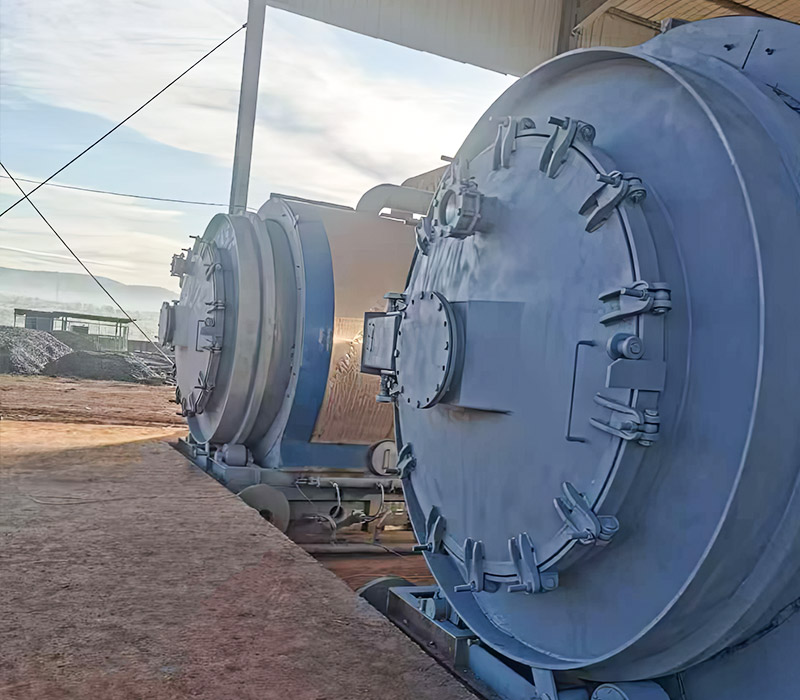
Tyre pyrolysis is thermochemical decomposition in the complete absence of oxygen. Without oxygen, combustion cannot occur. Instead, sustained heat — typically applied externally to a sealed rotating reactor — causes the long-chain hydrocarbon polymers in rubber to crack into shorter molecules, which exit the reactor as gas or remain as solid carbon residue. The full process unfolds in five integrated stages.
Pre-treatment: Whole tyres must be reduced to a manageable feedstock size before entering the reactor. For continuous systems, this means shredding to 3–5 cm particles using tyre shredders that reduce whole tyres to 3–5 cm feedstock suitable for automated conveyor feeding. Some batch reactors can accept larger pieces or even whole passenger car tyres, but smaller particle sizes improve heat transfer and oil yield in all reactor types.
Thermal cracking: Pre-shredded rubber enters the sealed, oxygen-purged reactor and is heated above 300°C — typically between 350°C and 550°C for rubber compounds. The molecular bonds in the polymer chains break progressively, releasing a mixed hydrocarbon gas stream. The reactor is maintained under slight negative pressure to prevent gas leakage and improve operator safety.
Condensation and oil collection: The hot pyrolysis gas exits the reactor and passes through a multi-stage condensation system. Heavier fractions liquify first, yielding heavy pyrolysis oil; lighter fractions condense at lower temperatures into naphtha-range oil. Non-condensable gases — primarily methane, ethylene, and hydrogen — are recycled back to the reactor burner, making the process partially or fully self-sustaining on fuel once steady state is reached.
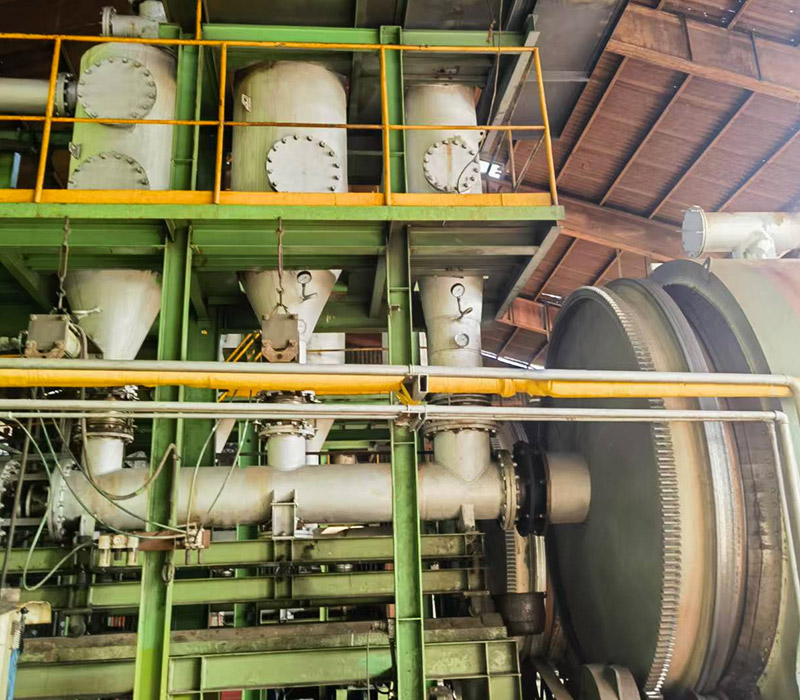
Solid residue handling: Carbon black and steel wire are discharged from the reactor's solid outlet. A magnetic separator strips the steel wire cleanly. The carbon black residue — technically recovered carbon black (rCB) — is conveyed to storage or passed to downstream processing equipment. For a detailed breakdown of the tire pyrolysis process and product yields by feedstock type, the reactor design and temperature profile are the primary variables.
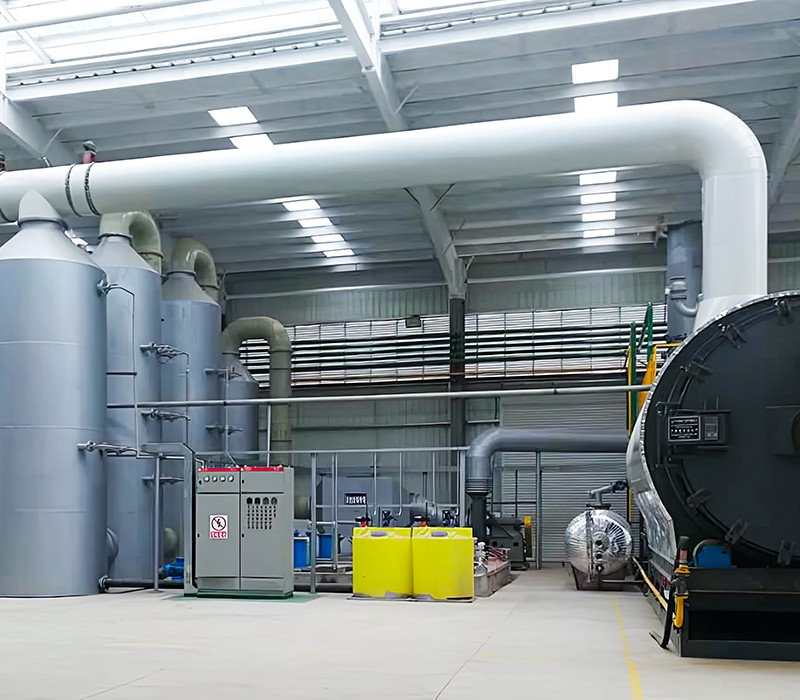
Flue gas treatment: Post-combustion exhaust from the burner passes through de-dusting, desulfurization, and wet scrubbing systems before atmospheric release. Properly specified emission control trains bring output into compliance with EU Industrial Emissions Directive and EPA equivalent standards — a non-negotiable requirement for project permitting in most markets.
、
The economic case for tyre pyrolysis rests on selling four outputs from a single input stream. Typical product yields from passenger and truck tyre feedstock are:
| Product | Typical Yield | Primary Applications | Indicative Value |
|---|---|---|---|
| Tyre Pyrolysis Oil (TPO) | 40–45% | Industrial fuel, power generation, diesel blending | $300–$500/tonne |
| Recovered Carbon Black (rCB) | 30–35% | Rubber manufacturing, coatings, construction filler; N330/N550/N660 grades after refinement | $150–$800/tonne (raw to refined) |
| Steel Wire | 10–15% | Scrap steel recycling | $100–$200/tonne |
| Combustible Syngas | 5–10% | Recycled as reactor fuel; reduces external energy consumption | Fuel cost offset |
Of the four outputs, tyre pyrolysis oil drives the majority of revenue. With a calorific value of approximately 10,000–10,600 kcal/kg, TPO is directly competitive with conventional heavy fuel oil and finds ready buyers among cement plants, steel mills, glass factories, and heavy oil generator operators. For projects targeting higher margins, further refining through distillation equipment can upgrade raw TPO to diesel-range fuel — roughly doubling the per-tonne value.
Recovered carbon black is the product with the greatest upside. Raw rCB commands modest prices as a low-grade filler, but post-processing through grinding and granulation raises its purity and surface area to levels qualifying for ASTM N-series grades — N550 and N660 rCB can reach values five times higher than unprocessed char. As demand for sustainable alternatives to virgin carbon black grows alongside tyre manufacturers' Scope 3 emissions obligations, the market for quality-certified rCB is strengthening steadily.
Equipment configuration is the most consequential decision in a pyrolysis project. The two main plant types — batch and continuous — serve different throughput scales and carry different capital and operational profiles.
| Parameter | Batch Plant | Continuous Plant |
|---|---|---|
| Daily Capacity | 1–20 tonnes/day | 20–50+ tonnes/day |
| Annual Throughput | 300–6,000 tonnes/year | 7,000–18,000+ tonnes/year |
| Operation Mode | One or two cycles per day; full cool-down between batches | 24/7 uninterrupted; no daily heating/cooling cycles |
| Energy Efficiency | Lower — repeated heat-up cycles increase fuel consumption | Higher — up to 40% lower energy per tonne processed |
| Labour Requirement | More operators per tonne; loading/unloading between each cycle | Minimal — typically 2 operators via PLC automation |
| Capital Entry Point | Lower initial investment; suitable for entry-level projects | Higher initial cost; justified at scale |
| Best Suited For | Smaller feedstock volumes; operators new to pyrolysis | Commercial-scale operations; high-volume tyre collection |
For investors evaluating entry at 5–10 tonnes per day, a batch system provides a lower-risk starting point with simpler mechanics and easier maintenance. Scaling beyond 15–20 tonnes per day shifts the economics decisively toward continuous operation. The elimination of daily heat-up and cool-down cycles in a continuous plant reduces fuel consumption by 30–40% per tonne and enables the labor reductions that make large-scale throughput financially viable.
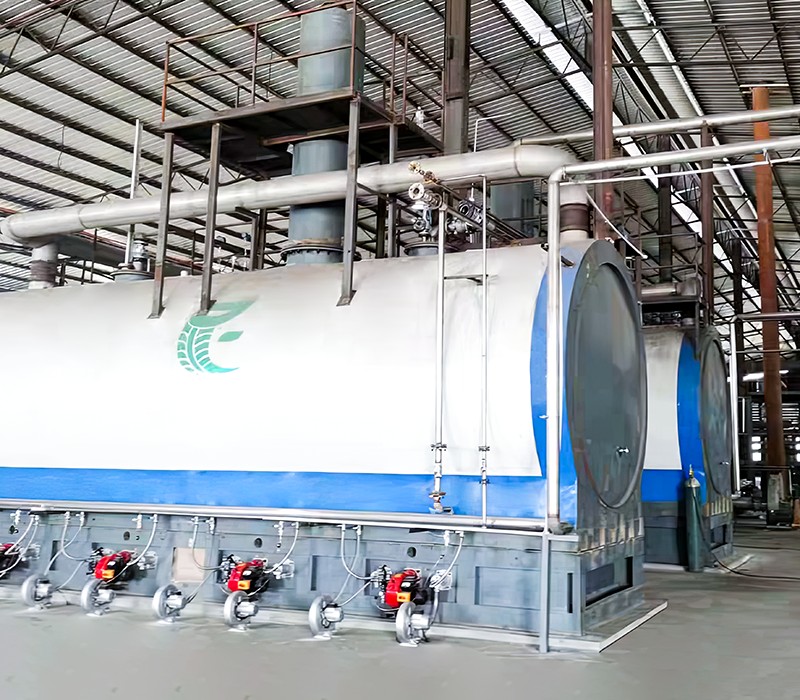
A thorough review of the economics and operational advantages of continuous pyrolysis machines shows that a 20-tonne-per-day continuous system can generate gross daily revenues of $6,000–$10,000 USD from oil, carbon black, and steel wire combined — figures that support equipment payback periods of two to four years at current market prices. For continuous tyre-to-oil pyrolysis systems designed for 24/7 industrial operation, micro-negative pressure reactor design, automated feeding, and integrated syngas recirculation are the technical differentiators to prioritise in specification.
A tyre pyrolysis project is, at its core, a waste processing business with commodity output sales — which means project economics are sensitive to three variables: feedstock acquisition cost, product offtake pricing, and operating uptime. Getting all three right requires planning beyond the reactor itself.
Feedstock supply: Waste tyres are widely available, but securing a reliable inbound supply at acceptable cost requires relationships with tyre retailers, fleet operators, and municipal collection schemes. In markets with EPR legislation, tyre collection fees can make feedstock effectively free or even revenue-positive. In markets without EPR, budget for logistics and aggregation costs.
Oil quality and upgrading: Raw TPO sells at a discount to refined diesel, and some industrial buyers impose specifications on sulfur content and viscosity that raw pyrolysis oil may not consistently meet. Pairing a pyrolysis plant with waste oil distillation equipment to refine raw pyrolysis oil into higher-grade fuels is a proven route to a stronger margin per tonne of oil produced, at the cost of added capital and energy consumption.
Carbon black value recovery: Many operators sell raw rCB at commodity filler prices and leave substantial value on the table. Downstream grinding and granulation equipment upgrades rCB to N-series grades, expanding the buyer universe to rubber compounders, pigment manufacturers, and tyre producers — markets where pricing is structurally higher and contracts are longer-term.
Permitting and compliance: Environmental permitting is the most commonly underestimated timeline risk in pyrolysis project development. Emission control specifications, site classification, and effluent handling requirements vary significantly by jurisdiction. Engaging a supplier with documented project approvals in your target country substantially reduces permitting risk — CE certification and ISO 14001 compliance are baseline credentials to verify.
Taken together, a well-configured tyre pyrolysis plant addresses one of the most persistent waste management problems of the modern industrial era while generating four independent revenue streams from a feedstock that is, in many markets, available at zero or negative cost. The technology is mature, the regulatory direction is clear, and the feedstock supply is growing. The window for early-mover advantage in underserved markets remains open — but it is narrowing as institutional investors and waste management groups scale up deployments globally.






Let's Pyrolysis!


 +44 7529 150720
  [email protected]
  300 meters east of the South Railway Station in Shangqiu City, Henan Province
  Global Waste-to-Energy Solutions Waste Resource Utilization Equipment Manufacturer

 Profit Calculator
 English
 русский
 Français
 Español
 عربى
عربى