
 5 minutes
Content
Tire pyrolysis is a thermochemical process that decomposes end-of-life rubber tires in the absence of oxygen at elevated temperatures, typically between 300°C and 700°C. Without oxygen present, combustion cannot occur. Instead, the complex polymer chains in rubber break down into simpler hydrocarbon compounds, yielding a range of valuable recovered materials including pyrolysis oil, carbon black, steel wire, and combustible gas.
With an estimated 1 billion waste tires generated globally every year—and conventional disposal options such as landfilling increasingly restricted by legislation—tire pyrolysis has emerged as one of the most technically and commercially promising routes for waste tire valorization. It addresses both an environmental challenge and a resource recovery opportunity simultaneously.
The tire pyrolysis process follows a well-defined sequence of steps, from feedstock preparation through to product separation and collection. Understanding each stage clarifies both the engineering requirements and the quality of outputs achievable.
Whole tires or pre-shredded tire chips are fed into the pyrolysis reactor. Shredding to a particle size of 50–100 mm is common in continuous systems, as smaller feedstock improves heat transfer and processing efficiency. Steel wire and fiber reinforcement may be partially removed before processing or separated downstream.
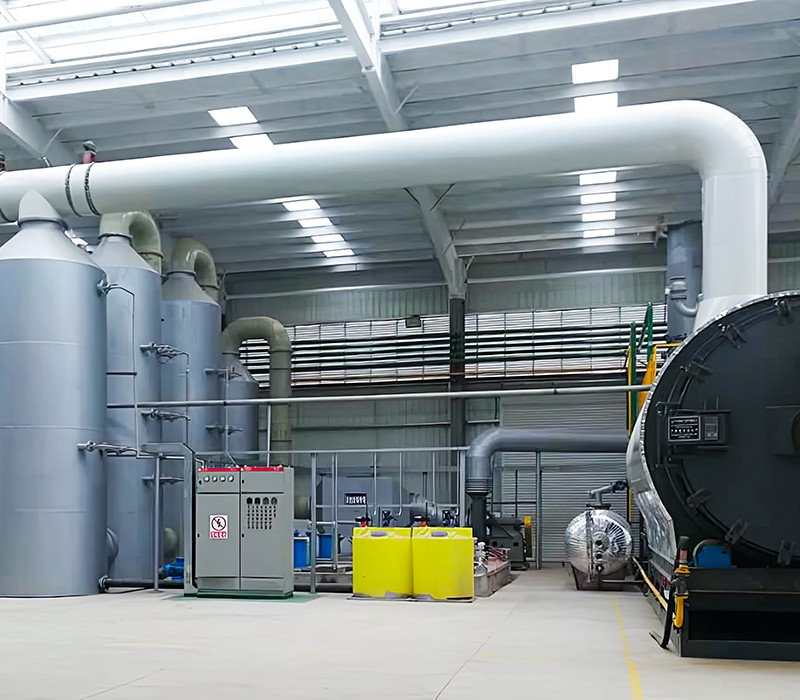
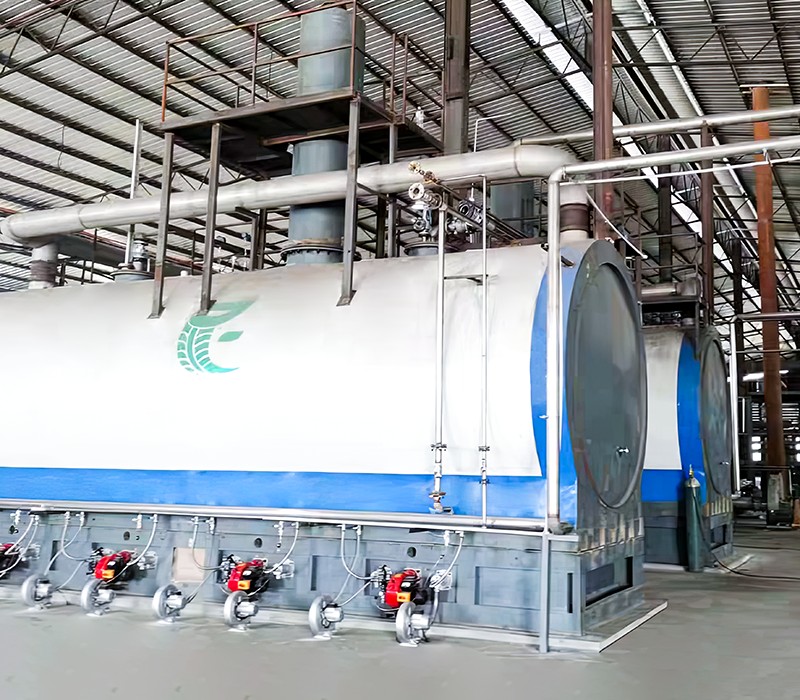
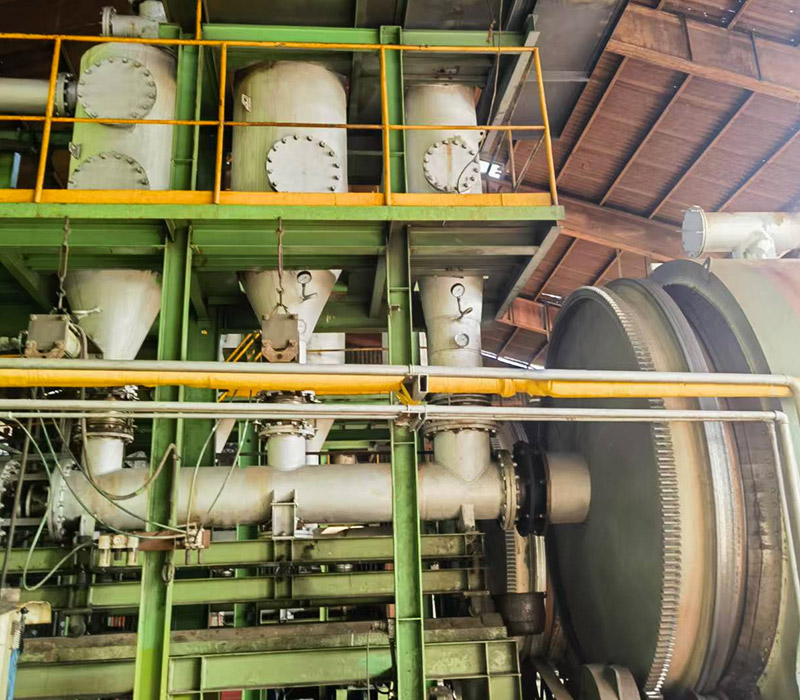
Inside the sealed, oxygen-free reactor, heat is applied externally—typically via gas burners or electric heating elements. As temperatures rise, the rubber's polymer chains undergo thermal cracking: long-chain hydrocarbons break into shorter volatile molecules that exit the reactor as pyrolysis gas, while the solid carbonaceous residue (char) and steel remain in the reactor chamber. Reactor designs include fixed-bed batch reactors, rotary kiln continuous reactors, and vacuum pyrolysis systems, each offering different throughput capacities and product yield profiles.
The volatile gases exiting the reactor pass through a condensation system. Heavier hydrocarbon fractions condense into pyrolysis oil (tire-derived fuel, TDF oil), while lighter non-condensable gases are recirculated to fuel the reactor itself, improving overall energy efficiency. The solid char is discharged, cooled, and processed further into recovered carbon black (rCB). Steel wire is magnetically separated and sold for scrap metal recycling.
| Process Stage | Key Action | Output |
|---|---|---|
| Feedstock Preparation | Shredding / sizing | Tire chips ready for reactor |
| Pyrolysis Reaction | Thermal cracking at 300–700°C, no oxygen | Volatiles + solid char + steel |
| Condensation | Cooling volatile gases | Pyrolysis oil + non-condensable gas |
| Char Processing | Milling, activation, purification | Recovered carbon black (rCB) |
| Metal Separation | Magnetic separation | Scrap steel wire |
One of the most compelling aspects of tire pyrolysis is that virtually all of the input material is converted into usable outputs. A typical passenger car tire yields the following approximate product distribution by weight:
Tire pyrolysis oil is a dark, hydrocarbon-rich liquid with a calorific value of approximately 40–43 MJ/kg—comparable to diesel fuel. It is used directly as an industrial fuel in cement kilns, steel furnaces, and marine boilers, or refined further into diesel and gasoline fractions. Upgraded tire pyrolysis oil is increasingly being evaluated as a feedstock for petrochemical production, contributing to circular economy goals in the chemicals industry.
The solid char produced during pyrolysis contains significant quantities of carbon black—the same reinforcing material used extensively in tire manufacturing. After milling and purification, recovered carbon black (rCB) can substitute for virgin carbon black in rubber compounding, plastics, inks, and coatings. The global carbon black market exceeded USD 17 billion in 2023, making rCB a high-value product stream. Achieving quality grades comparable to ASTM N550 or N660 virgin grades remains an active area of industrial R&D.
The steel reinforcement recovered from tire pyrolysis is high-quality, low-contamination scrap wire, readily accepted by steel mills and recyclers. A single truck tire can contain up to 3–5 kg of steel, making metal recovery a meaningful revenue stream, particularly for large-scale tire pyrolysis operations processing truck and OTR (off-the-road) tires.
The non-condensable gas fraction—composed primarily of hydrogen, methane, ethane, and propane—has a calorific value of 35–45 MJ/m³, higher than natural gas. In well-designed pyrolysis systems, this gas is recirculated to heat the reactor, making the process largely energy self-sufficient once steady-state operation is reached. Surplus gas can be used for on-site electricity generation.
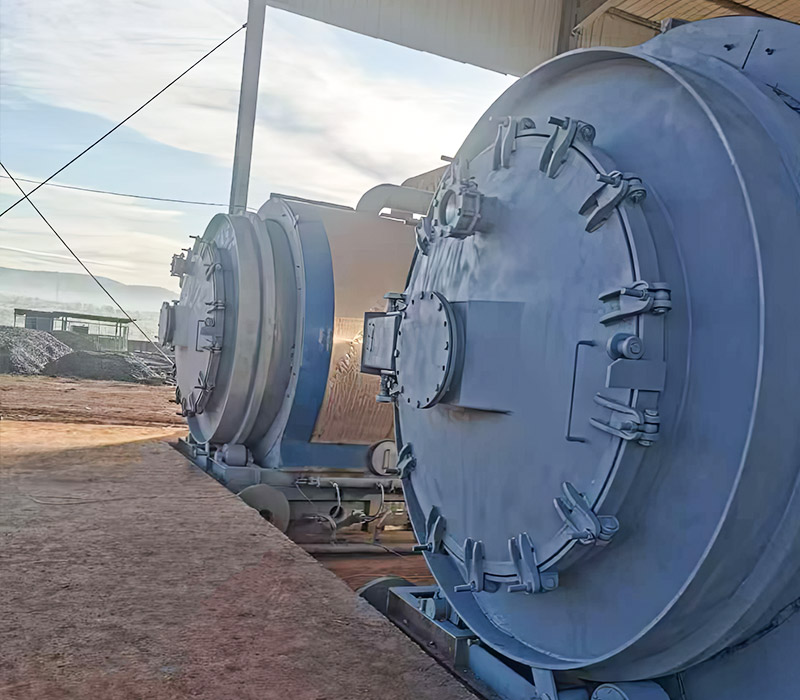
Tire pyrolysis offers a compelling environmental profile compared to conventional waste tire disposal methods such as landfilling, stockpiling, or open burning—all of which carry severe ecological consequences.
However, responsible operation requires rigorous emissions control systems—including scrubbers, afterburners, and continuous stack monitoring—to prevent the release of polycyclic aromatic hydrocarbons (PAHs) and other volatile organics that can form during thermal processing of rubber.
| Method | Output | Energy Recovery | Material Recovery | Environmental Risk |
|---|---|---|---|---|
| Pyrolysis | Oil, rCB, gas, steel | High | High | Low (if controlled) |
| Co-processing (cement kilns) | Energy only | High | None | Low |
| Mechanical Grinding (crumb rubber) | Crumb rubber, steel fiber | None | Moderate | Very low |
| Incineration | Heat / electricity | Moderate | None | High (ash, NOx, dioxins) |
| Landfill | None | None | None | Very high |
The global tire pyrolysis market was valued at approximately USD 780 million in 2023 and is projected to grow at a compound annual growth rate (CAGR) of over 7% through 2030, driven by tightening waste regulations, rising demand for recycled carbon black, and increasing investment in circular economy infrastructure.
Key regulatory drivers include the EU End-of-Life Vehicles Directive, extended producer responsibility (EPR) schemes for tires in Europe and North America, and China's aggressive recycled materials targets under its 14th Five-Year Plan. In parallel, major tire manufacturers including Michelin, Bridgestone, and Continental have publicly committed to incorporating recycled content—including rCB from pyrolysis—into new tire production, creating a direct pull-market for pyrolysis outputs.
Standardization of recovered carbon black quality is an important industry milestone. The ASTM D8178 standard for rCB and the European REACH compliance framework provide the quality benchmarks that enable rCB from tire pyrolysis to enter mainstream rubber and plastics supply chains with confidence.
Despite its strong fundamentals, tire pyrolysis faces several technical and commercial hurdles that continue to limit broader adoption:
Continuous innovation is addressing tire pyrolysis's current limitations. Catalytic pyrolysis—introducing catalysts such as zeolites or metal oxides into the reactor—can shift product distributions toward higher-value lighter oil fractions and improve rCB purity. Microwave-assisted pyrolysis offers faster, more uniform heating with potentially lower energy consumption. And co-pyrolysis of tires with other waste streams such as plastics or biomass is being explored to optimize product yields and economics.
As sustainability mandates intensify and virgin material costs rise, tire pyrolysis is well positioned to transition from a niche waste management technology to a mainstream industrial process. With the right combination of process innovation, product standardization, and supportive policy frameworks, tire pyrolysis represents one of the most viable pathways to closing the loop on one of the world's most persistent waste challenges.







Let's Pyrolysis!


 +44 7529 150720
  [email protected]
  300 meters east of the South Railway Station in Shangqiu City, Henan Province
  Global Waste-to-Energy Solutions Waste Resource Utilization Equipment Manufacturer

 Profit Calculator
 English
 русский
 Français
 Español
 عربى
عربى