
 5 minutes
Content
A biomass pyrolysis plant is an industrial facility that converts organic biomass materials into valuable energy products and chemical by-products through a thermochemical process called pyrolysis. Pyrolysis heats biomass to temperatures typically between 300°C and 700°C in the complete absence of oxygen — or under severely restricted oxygen conditions — causing the organic compounds within the material to decompose chemically without combustion. The result is not ash and emissions, as in incineration, but a controlled suite of usable products: solid biochar, liquid bio-oil, and combustible syngas.
The distinction between pyrolysis and the two most commonly compared thermochemical processes — gasification and incineration — is fundamental. Incineration burns biomass in the presence of excess oxygen, converting the carbon content almost entirely to CO₂ and heat, with residual ash as the only solid output. Gasification operates with a limited, controlled oxygen or steam supply at higher temperatures (700°C–1,000°C), prioritizing syngas production. Pyrolysis, by eliminating oxygen from the reaction environment entirely, preserves a much larger fraction of the original carbon in solid and liquid form — generating biochar and bio-oil that retain significant chemical energy and commercial value that combustion-based processes destroy.
This ability to produce multiple valuable output streams simultaneously — rather than simply generating heat — is the defining commercial and environmental advantage of a biomass pyrolysis plant. A well-configured system can be largely energy self-sufficient, using the syngas produced during the pyrolysis reaction to fuel the reactor itself, while selling or utilizing biochar and bio-oil as revenue-generating products.
One of the most commercially significant characteristics of biomass pyrolysis technology is its broad feedstock flexibility. A wide range of organic waste materials can be processed, allowing plant operators to source raw material from multiple supply streams and reduce dependency on any single feedstock source.
Wood-based biomass is the most widely processed feedstock category globally. Wood chips, sawdust, timber offcuts, bark, and forestry residues are abundant, have relatively consistent composition, and produce high-quality biochar with good carbon content. Wood begins to thermally decompose at approximately 270°C and undergoes the bulk of its pyrolytic breakdown between 300°C and 500°C, making it well-matched to standard slow and conventional pyrolysis operating conditions.
Agricultural residues represent the largest volume of available biomass waste in most agricultural economies. Rice husks, wheat straw, corn cobs, sugarcane bagasse, cotton stalks, and similar crop residues are generated in enormous quantities at low or negative cost to the producer. Agricultural residues typically have higher ash content and lower bulk density than wood, which affects reactor design and biochar quality, but their abundance and low acquisition cost make them economically attractive feedstocks for large-scale pyrolysis operations.
Shell and hull materials — coconut shells, palm kernel shells, walnut shells, macadamia shells, and similar hard organic materials — produce some of the highest-quality biochar available from biomass pyrolysis. Their dense, uniform structure and low ash content yield biochar with high fixed carbon content, often above 80%, making the output suitable for activated carbon production, premium soil amendment, and high-value industrial applications that command significantly higher prices than standard biochar grades.
Regardless of feedstock type, two pre-processing requirements apply universally. First, moisture content must be reduced to below 15% — ideally below 10% — before pyrolysis begins. Excessive moisture consumes reactor heat through evaporation rather than driving the pyrolytic reaction, reducing throughput and product quality. Second, particle size must be controlled within the range appropriate to the reactor type — typically 5 to 20 mm for screw-fed rotary kiln systems. Oversized material jams feed mechanisms; excessively fine powder creates dust handling problems and reduces bio-oil quality through increased char carryover into the condensation system.
A complete biomass pyrolysis plant operates as an integrated sequence of unit processes, each of which must function correctly for the system to deliver consistent product quality and efficient operation.
Step 1 — Pre-treatment. Incoming biomass is first screened to remove oversized pieces and foreign objects, then dried in a rotary drum dryer using waste heat from the pyrolysis process to reduce moisture content to the target level. Once dried, material requiring size reduction passes through a hammer mill or shredder before being conveyed to the feed system.
Step 2 — Feeding. Dried, sized biomass is metered into the pyrolysis reactor through an airtight feeding mechanism — typically a screw conveyor with a sealed inlet — that maintains the oxygen-free atmosphere inside the reactor while allowing continuous material addition. The feeding rate controls residence time and therefore the degree of pyrolytic conversion.
Step 3 — Pyrolysis reaction. Inside the heated reactor chamber, biomass undergoes thermal decomposition as temperature rises through three overlapping reaction zones. Below approximately 280°C, free moisture and light volatile compounds are driven off. Between 280°C and 500°C, the cellulose and hemicellulose components of the biomass structure decompose, generating the bulk of the bio-oil precursor vapors and syngas. Above 500°C, lignin decomposition continues and the solid char matrix undergoes further carbonization, increasing fixed carbon content. The reactor maintains the target temperature profile using heat supplied by combustion of the syngas produced within the process itself — making the system thermally self-sustaining during steady-state operation after the initial startup phase.
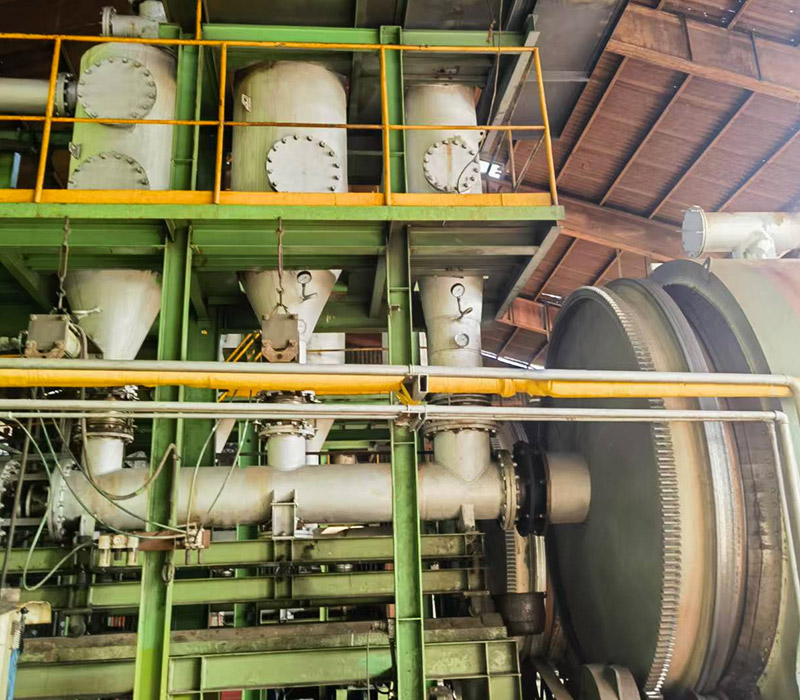
Step 4 — Product separation. The mixed stream of vapors, gases, and solid char exiting the reactor passes through a cyclone separator that removes entrained char particles from the gas stream. The cleaned vapor-gas mixture then enters a condensation system where bio-oil condenses and is collected in storage tanks. Non-condensable gases — the syngas fraction — pass through a gas purification system before being recycled to the reactor burner as process fuel.
Step 5 — Solid discharge. Biochar accumulates in the reactor and is continuously discharged through a sealed screw discharger into a water-cooled cooling conveyor. Cooling the biochar before it contacts ambient air is critical — hot biochar above 300°C will spontaneously oxidize and potentially ignite if exposed to oxygen before it has cooled sufficiently.
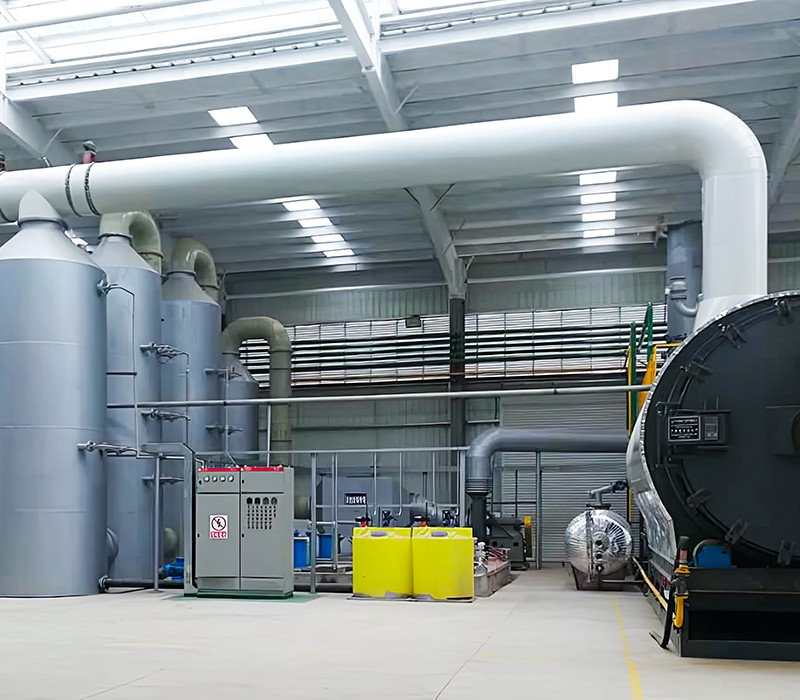
Step 6 — Flue gas treatment. Combustion gases from the reactor burner pass through a multi-stage treatment system — typically incorporating a flue condenser, dedusting cyclone, desulfurization scrubber, and wet electrostatic precipitator — before discharge to atmosphere. Modern biomass pyrolysis plants are designed to meet EU emission standards, with particulate, SO₂, NOx, and HCl concentrations controlled within regulatory thresholds.

Biomass pyrolysis is not a single fixed process but a family of related thermochemical conditions that produce significantly different product distributions depending on temperature, heating rate, and residence time. Selecting the correct pyrolysis mode for a given application is one of the most important decisions in plant design.
| Parameter | Slow Pyrolysis | Conventional Pyrolysis | Fast Pyrolysis |
|---|---|---|---|
| Temperature range | 300°C – 400°C | 400°C – 550°C | 450°C – 650°C |
| Heating rate | Very slow (<10°C/min) | Moderate (10–100°C/min) | Very fast (>1,000°C/s) |
| Solid residence time | Hours to days | 5 – 30 minutes | 0.5 – 2 seconds |
| Biochar yield | 25 – 35% | 20 – 30% | 10 – 15% |
| Bio-oil yield | 20 – 30% | 30 – 40% | 60 – 75% |
| Syngas yield | 35 – 45% | 25 – 35% | 10 – 20% |
| Primary product target | High-quality biochar | Balanced outputs | Maximized bio-oil |
Slow pyrolysis at low temperatures and extended residence times maximizes biochar yield and quality. The long exposure to moderate heat completes the carbonization of the solid fraction, producing biochar with the highest fixed carbon content and the most stable aromatic carbon structure — properties that determine biochar's longevity in soil and its effectiveness for carbon sequestration. Slow pyrolysis is the preferred mode for operators whose primary revenue target is premium biochar for agricultural or activated carbon markets.
Fast pyrolysis at high temperatures and very short residence times maximizes bio-oil yield, at the expense of biochar quantity and quality. The rapid heating rate drives volatile compounds out of the biomass structure before secondary cracking reactions can convert them to gases, producing bio-oil yields of 60 to 75% by dry weight of feedstock. Fast pyrolysis requires more sophisticated reactor designs — typically fluidized bed systems — and more complex downstream processing, but is the mode of choice when bio-oil for fuel or chemical feedstock production is the primary objective.
Conventional pyrolysis at intermediate conditions produces a balanced distribution of all three output products and is the most common configuration for commercial biomass pyrolysis plants seeking operational flexibility across multiple product markets.
The commercial viability of a biomass pyrolysis plant depends directly on the market value of its three output streams. Understanding what each product is, what it can be used for, and how its value is determined is essential for project economic planning.
Biochar is the solid carbonaceous residue remaining after pyrolysis. Its most established application is as a soil amendment: biochar's highly porous structure improves soil water retention, aeration, and microbial habitat, while its chemical stability means that carbon locked into biochar structure remains in the soil for hundreds to thousands of years rather than being rapidly oxidized back to CO₂ as happens with uncharred organic matter. This carbon stability is the basis for biochar's growing role in voluntary carbon markets — biochar produced from waste biomass and applied to agricultural soil qualifies as a verified carbon removal method under multiple international standards, generating carbon credits that can be sold to corporations and governments seeking to offset emissions. Premium-grade biochar from shell feedstocks commands prices of $200 to $800 per tonne in agricultural and industrial markets, while biochar qualifying for verified carbon credit programs can achieve significantly higher effective values when carbon credit revenue is included.
Bio-oil, also called pyrolysis oil or wood vinegar depending on the fraction, is the liquid condensate recovered from the pyrolysis vapor stream. Crude bio-oil is a complex mixture of oxygenated organic compounds — acids, alcohols, aldehydes, ketones, phenols, and heavier oligomeric compounds — with a calorific value roughly half that of conventional fuel oil. In its crude form, bio-oil can be used directly as a boiler fuel for industrial heat generation. With additional upgrading — catalytic hydrotreatment to reduce oxygen content and acid number — bio-oil can be refined into transportation fuels and chemical feedstocks that displace petroleum-derived products. Wood vinegar, a lighter aqueous fraction of bio-oil, has established markets as an agricultural pesticide, plant growth promoter, and soil microbial activator in Asian markets, commanding prices of $0.50 to $2.00 per liter depending on grade and application.
Syngas (synthesis gas) is the non-condensable gas fraction produced during pyrolysis, consisting primarily of hydrogen, carbon monoxide, methane, and CO₂. In most commercial biomass pyrolysis plant configurations, syngas is not sold externally but is recycled internally as the primary fuel for the reactor heating system. This internal recycling is what makes the pyrolysis process thermally self-sustaining: after the initial startup phase — during which external fuel such as LPG, natural gas, or diesel provides the startup heat — the syngas generated by the process itself supplies sufficient energy to maintain reactor temperature indefinitely. In plants with surplus syngas production above reactor heating requirements, the excess can be used to generate electricity via a gas engine or turbine, providing an additional revenue stream or reducing grid electricity costs.

The reactor is the heart of any biomass pyrolysis plant, and the choice of reactor type determines feedstock flexibility, product distribution, throughput capacity, and operational complexity. Three reactor configurations account for the majority of commercial biomass pyrolysis installations.
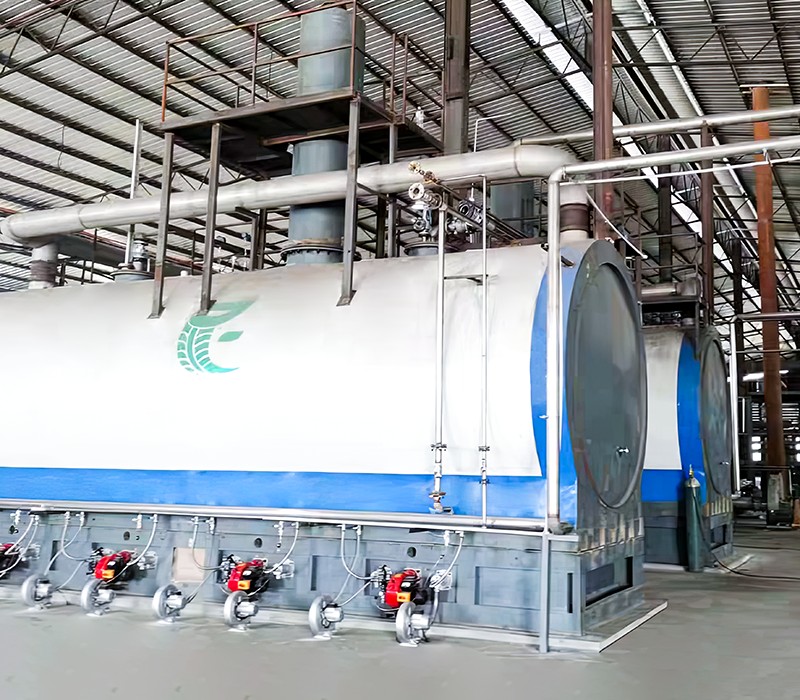
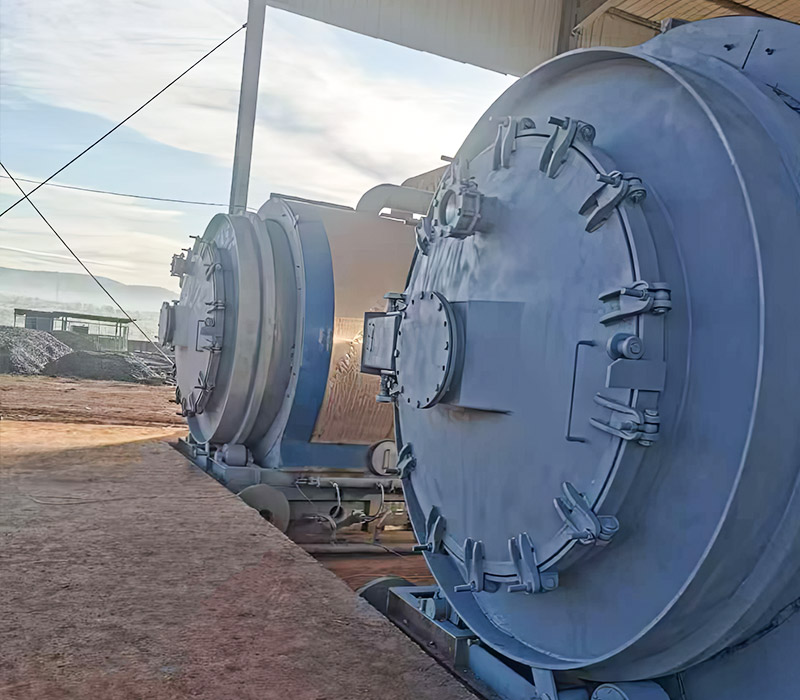
Rotary kiln reactors are the most common configuration for commercial-scale biomass pyrolysis plants processing solid feedstocks. The reactor consists of a slowly rotating inclined cylinder — typically 1 to 3 meters in diameter and 6 to 15 meters in length — through which biomass travels by gravity from the feed end to the discharge end as it undergoes pyrolysis. Rotation continuously tumbles the material, improving heat distribution and preventing hotspot formation. Rotary kilns handle a wide range of feedstock particle sizes and moisture contents, making them the most feedstock-flexible reactor type. They operate in both batch and continuous modes, with continuous-feed designs preferred for large-scale production. The primary limitation of the rotary kiln is heat transfer efficiency: because heat must conduct through the tumbling bed of biomass, heating rates are moderate, which favors slow and conventional pyrolysis product distributions rather than the rapid heating required for maximum bio-oil yield.
Fixed bed reactors are simpler in construction than rotary kilns and well-suited to small and medium-scale batch operations. Biomass is loaded into a stationary vessel, heated externally or internally, and allowed to pyrolyze over a programmed time-temperature cycle. Fixed bed reactors are lower in capital cost and simpler to operate, making them appropriate for smaller production volumes, research and development applications, and operations in locations where technical support for more complex equipment is limited. Their primary drawback is batch operation — the reactor must be cooled, unloaded, recharged, and reheated between cycles, which limits throughput and increases energy consumption per unit of output compared to continuous systems.
Fluidized bed reactors suspend biomass particles in a stream of hot inert gas or sand, achieving extremely rapid and uniform heat transfer to the biomass particles — the mechanism required for fast pyrolysis conditions. Because every particle is individually surrounded by the heating medium, heating rates of 1,000°C per second or more are achievable, dramatically shortening the residence time needed for complete pyrolysis and driving bio-oil yields to their maximum. Fluidized bed systems are the technology of choice for bio-oil-focused production at industrial scale, but they require more uniform feedstock particle sizing than rotary kilns, more complex gas handling systems, and higher capital and operating costs. They are best suited to large-scale operations with consistent feedstock supply and dedicated bio-oil upgrading infrastructure downstream.
Selecting a biomass pyrolysis plant configuration requires working through five interconnected decision points. Each affects the others, and resolving them in sequence produces a specification that is internally consistent and commercially viable.
Step 1 — Define your feedstock. Identify the specific biomass material or materials available at your location, their annual volume, moisture content range, and particle size as-received. Feedstock characteristics drive reactor type selection, pre-treatment equipment requirements, and product quality expectations. A plant designed for consistent dry wood chips will have a different configuration from one designed for mixed agricultural residues with variable moisture and particle size.
Step 2 — Set your production capacity. Determine the daily or annual tonnage of feedstock to be processed, accounting for seasonal availability fluctuations if the feedstock supply is not year-round. Match this to the reactor throughput rating, allowing a 15 to 20% margin above average daily processing volume for maintenance downtime and feedstock variability. Capacity also determines whether a batch or continuous-feed system is appropriate — continuous systems become economically justified above approximately 500 kg per hour of feedstock throughput.
Step 3 — Identify your primary product target. Determine which of the three output products — biochar, bio-oil, or energy from syngas — represents your primary revenue source or operational objective. This decision drives pyrolysis mode selection (slow for biochar, fast for bio-oil, conventional for balanced output) and determines what downstream processing and storage infrastructure is required. A biochar-focused plant requires biochar cooling, packaging, and storage; a bio-oil-focused plant requires condensation, tank storage, and potentially upgrading equipment.
Step 4 — Assess site infrastructure and constraints. Evaluate the available land area, grid electricity supply capacity, water availability for cooling systems, access road capacity for feedstock delivery and product dispatch vehicles, and proximity to residential areas that may impose noise or emissions constraints. Many biomass pyrolysis plants are designed for containerized or modular installation that minimizes civil construction requirements, but adequate feedstock storage area and product handling space remain essential regardless of plant format.
Step 5 — Confirm regulatory compliance requirements. Biomass pyrolysis plants are subject to environmental permitting in most jurisdictions, covering atmospheric emissions, wastewater discharge, solid waste handling, and fire safety. Identify the applicable standards in your region before finalizing plant specification — emission control system requirements vary significantly between countries and regions, and selecting a plant configuration that meets the applicable standards from the outset is far less costly than retrofitting emission controls after installation.
The investment case for a biomass pyrolysis plant rests on two complementary pillars: the direct commercial value of its output products, and the broader environmental and regulatory benefits that increasingly translate into tangible financial value.
On the environmental side, biomass pyrolysis addresses two of the most pressing waste management challenges in agricultural and forestry economies. Crop residues, timber offcuts, and processing wastes that would otherwise be open-field burned — a major source of particulate pollution and greenhouse gas emissions in many regions — are instead converted into stable, valuable products. The biochar produced locks a significant fraction of the original biomass carbon into a chemically stable form that persists in soil for centuries, effectively removing carbon from the atmospheric cycle. Life-cycle analyses consistently show that biomass pyrolysis systems can achieve net negative carbon emissions when the full carbon accounting is performed — including feedstock carbon sequestration in biochar, the displacement of fossil fuel-derived products by bio-oil and syngas, and the avoided emissions from alternative disposal of the feedstock.
On the economic side, the revenue model of a biomass pyrolysis plant is more resilient than single-product energy facilities because it diversifies across multiple output streams. Biochar prices, bio-oil market conditions, and carbon credit values do not move in perfect correlation, meaning that a decline in one revenue stream is partially offset by stability or growth in the others. The growing institutional demand for verified carbon removal credits — from corporate net-zero commitments, national carbon trading schemes, and voluntary offset markets — has created a new and rapidly expanding revenue source for biochar producers that did not exist at scale a decade ago. Plants that achieve recognized certification for their biochar under standards such as the European Biochar Certificate (EBC) or the International Biochar Initiative (IBI) can access premium pricing in carbon markets that significantly improves project financial returns compared to selling biochar purely on product value alone.
The combination of waste reduction, carbon sequestration, energy recovery, and diversified product revenues positions the biomass pyrolysis plant as one of the most economically and environmentally compelling investments available in the renewable energy and circular economy sectors today.






Let's Pyrolysis!


 +44 7529 150720
  [email protected]
  300 meters east of the South Railway Station in Shangqiu City, Henan Province
  Global Waste-to-Energy Solutions Waste Resource Utilization Equipment Manufacturer

 Profit Calculator
 English
 русский
 Français
 Español
 عربى
عربى