
 5 minutes
Content
A tire pyrolysis plant thermally decomposes waste tires in an oxygen-free environment, converting them into four commercially valuable outputs: pyrolysis oil, carbon black, steel wire, and combustible gas. A single tonne of waste tires typically yields 40–50% pyrolysis oil, 30–35% carbon black, 10–15% steel wire, and 5–10% combustible gas by weight. For investors and operators evaluating tire-to-fuel or tire recycling projects, the economics are real but highly dependent on plant scale, output quality, local market prices, and regulatory compliance. This article walks through how the process works, what equipment is involved, what each output is worth, and what separates profitable plants from struggling ones.
Pyrolysis is a thermochemical decomposition process. In a tire pyrolysis plant, shredded or whole tires are loaded into a sealed reactor vessel and heated to temperatures between 350°C and 550°C in the complete absence of oxygen. Without oxygen, combustion cannot occur — instead, the complex polymer chains in rubber break down into shorter hydrocarbon molecules.
The process proceeds through several distinct stages:
A complete processing cycle in a batch-type reactor typically takes 8–12 hours from loading to discharge, including heating, reaction, and cooling time. Continuous or rotary kiln systems reduce cycle time substantially but require higher capital investment.
A complete tire pyrolysis plant consists of several interconnected systems. Understanding the function of each is essential for evaluating equipment quotations and identifying where quality differences actually matter.
Passenger car tires can often be fed whole into larger reactor designs, reducing pre-treatment costs. Truck tires and oversized tires typically require shredding to pieces of 50–100 mm to ensure uniform heat distribution inside the reactor and prevent hot spots that reduce oil yield. A tire shredder, wire separator (to pre-remove bead wire), and conveyor or skip loader complete this section.
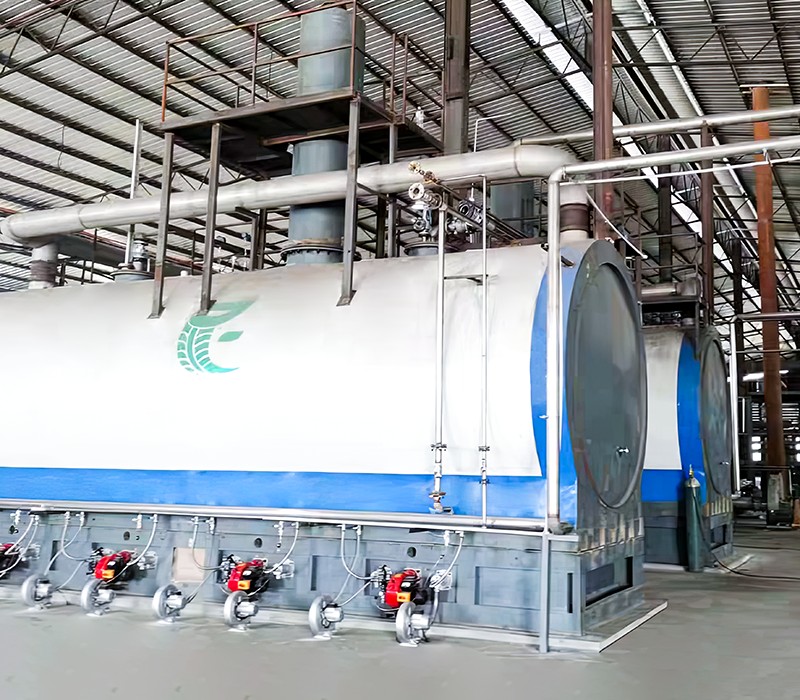
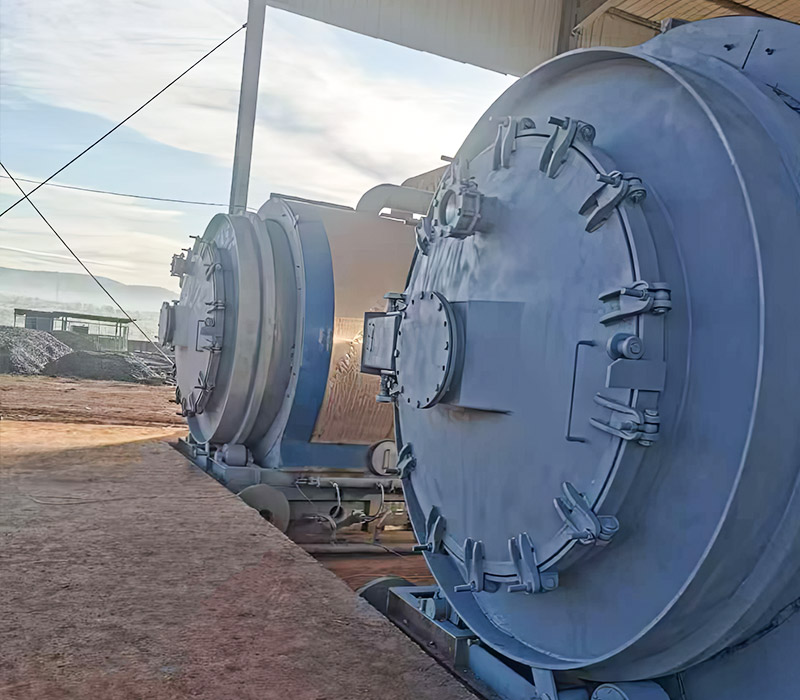
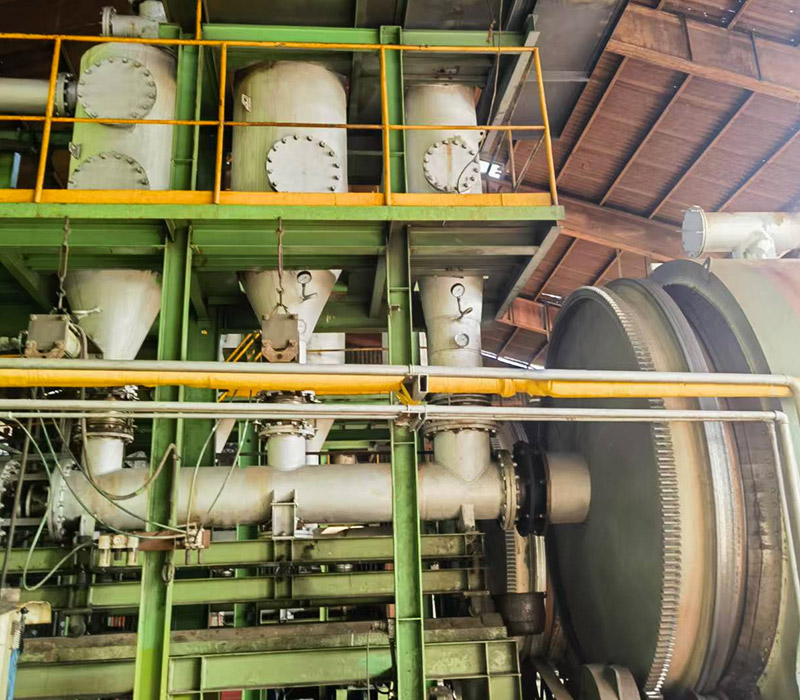
The reactor is the core of any tire pyrolysis plant and the component where design quality has the greatest impact on safety, yield, and operating life. The three main reactor configurations are:
Reactor shell material is critical. Boiler-grade Q345R or equivalent pressure vessel steel with wall thickness of 16–20 mm is the minimum standard for safe operation at process temperatures. Under-specification reactors are the most common cause of catastrophic failures in the tire pyrolysis industry.
Pyrolysis vapors leaving the reactor pass through a series of condensers — typically a spray condenser followed by tube-and-shell heat exchangers — where they are cooled and the condensable fractions liquefy into pyrolysis oil. The non-condensable gas fraction (mainly C1–C4 hydrocarbons) is collected separately and routed back to the reactor burner as fuel, reducing external energy consumption by 40–60% once the process reaches steady state.
Solid residue (carbon black and steel wire) is discharged from the reactor through a sealed, water-cooled screw conveyor to prevent re-oxidation and maintain an oxygen-free environment. Steel wire is separated magnetically. The carbon black is conveyed to a storage silo or, in more advanced plants, to a carbon black grinding and pelletizing line for higher-value output.
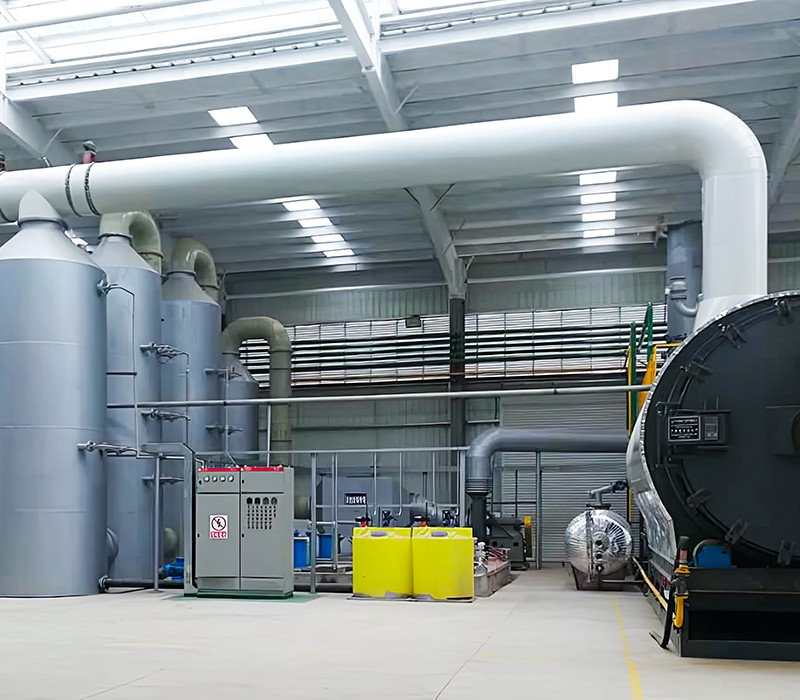
Combustion gases from the reactor heating system must be treated before atmospheric release. A complete treatment train includes a desulfurization scrubber, dust removal (bag filter or wet scrubber), and in markets with strict emissions standards, a DeNOx system. This is the component most commonly underspecified in low-cost plant quotations — and the one most likely to result in regulatory shutdown if inadequate.

The commercial viability of a tire pyrolysis plant depends almost entirely on the quality and marketability of its four output streams. Each has a distinct set of quality variables that determine whether it commands a commodity price or a premium.
Pyrolysis oil is the primary revenue stream in most plants. It is a dark, viscous fuel with properties similar to No. 4 or No. 6 fuel oil, with a calorific value of approximately 40–43 MJ/kg — comparable to diesel. It can be used directly as a fuel in industrial boilers, cement kilns, steel foundries, and marine vessels (as a heavy fuel blendstock). Sulfur content is typically 0.8–1.5% by weight, which limits its use in markets with strict sulfur regulations unless further refined.
With downstream distillation, TPO can be refined into diesel-range fuel, naphtha, and light fuel oil fractions that command significantly higher prices. A distillation unit adds capital cost of $50,000–$200,000 depending on capacity but can increase the effective selling price of the oil fraction by 30–60% in markets where refined products are preferred.
The carbon black residue from tire pyrolysis — referred to as recovered carbon black (rCB) — contains original carbon black filler from the tire compound, along with ash from inorganic tire additives. Raw rCB is sold as a low-grade substitute for virgin N330 or N550 carbon black in non-critical rubber applications, typically at 40–60% of virgin carbon black prices. After grinding to reduce particle size and remove ash through activation or air classification, rCB can be upgraded to performance levels closer to ASTM N660 specifications, unlocking use in tire manufacturing — a significantly larger and higher-value market. The global recovered carbon black market was valued at approximately $380 million in 2022 and is projected to grow at 6–8% annually through 2030 according to market research from Grand View Research.
Steel bead wire and belt steel recovered from tire pyrolysis is sold to steel scrap dealers or directly to steel mills. It typically contains residual carbon char on the surface but is otherwise clean, high-carbon steel wire with scrap value of approximately $150–$250 per tonne in most markets. While not a major revenue contributor, it is a consistent and low-effort income stream.
Non-condensable gas output, consisting primarily of methane, hydrogen, ethylene, and propane, has a calorific value of approximately 35–45 MJ/m³ — comparable to natural gas. Rather than selling this gas (which requires gas grid infrastructure), virtually all modern tire pyrolysis plants recirculate it as reactor heating fuel, dramatically reducing external energy costs.
| Output Product | Yield per Tonne of Tires | Typical Selling Price | Primary Use |
|---|---|---|---|
| Pyrolysis Oil (TPO) | 400–500 kg | $250–$450/tonne (raw) $500–$700/tonne (refined) |
Industrial fuel, refinery feedstock |
| Recovered Carbon Black | 300–350 kg | $80–$150/tonne (raw) $200–$400/tonne (upgraded) |
Rubber filler, pigment, tire mfg. |
| Steel Wire | 100–150 kg | $150–$250/tonne | Steel scrap, wire rod mills |
| Combustible Gas | 50–100 kg equiv. | Used internally as fuel | Reactor heating (self-sustaining) |
Tire pyrolysis plants are commercially available across a wide range of capacities. The right scale depends on local tire supply, available capital, and target markets for outputs. Undersizing a plant relative to the available tire supply wastes a feedstock advantage; oversizing risks chronic underutilization that destroys unit economics.
| Plant Scale | Daily Capacity | Reactor Type | Estimated CAPEX | Typical Payback Period |
|---|---|---|---|---|
| Small | 5–10 tonnes/day | Batch rotary | $150,000–$350,000 | 2–4 years |
| Medium | 20–30 tonnes/day | Batch or continuous | $600,000–$1,500,000 | 2–3 years |
| Large | 50–100 tonnes/day | Continuous rotary kiln | $2,000,000–$5,000,000+ | 1.5–3 years |
These figures assume turnkey supply from established manufacturers. Plants with full emissions treatment systems, distillation units, and carbon black upgrading lines will sit at the upper end of these ranges. Low-cost quotations that exclude flue gas treatment, automated control systems, or proper pressure vessel certification should be treated with caution — the hidden costs of regulatory compliance retrofits or safety incidents far exceed the initial savings.
Tire pyrolysis is classified as a waste treatment and thermochemical processing operation in most jurisdictions, making it subject to environmental permitting, air emissions limits, and hazardous waste handling regulations. The regulatory landscape varies significantly by country and region, but these requirements are universal enough to plan around.
The tire pyrolysis industry has a significant number of plants operating below their economic potential, and a smaller number generating strong returns. The differences are consistent and instructive.
Plants that operate at high utilization rates almost always have formal agreements with tire retailers, vehicle dismantlers, municipal collection schemes, or EPR program administrators before commissioning. Operating at 60% capacity versus 90% capacity can be the difference between a marginal and a highly profitable operation when fixed costs (depreciation, labor, permits) are spread over more tonnes processed.
Operators who treat output marketing as an afterthought consistently face oil stockpiling, carbon black disposal costs, or forced sales at distressed prices. The most successful operations have offtake agreements for TPO with industrial fuel users and carbon black supply agreements with rubber compounders signed before the plant begins production.
Raw rCB sold as low-grade filler captures only a fraction of the value locked in this output stream. Plants that add a carbon black grinding mill, pelletizer, and quality testing capability can access rubber and plastics compounders willing to pay 2–4× the raw rCB price for material that meets consistent particle size and structure specifications.
At capacities above 20 tonnes per day, continuous rotary kiln designs have a compelling operating cost advantage over batch systems. Eliminating the cooling-and-reloading cycle reduces energy consumption per tonne by 15–25%, reduces labor requirements, and enables more consistent output quality — all of which compound meaningfully over a full year of operation.
Regulators in most markets are increasing oversight of waste-to-energy and pyrolysis operations. Plants that were permitted under lenient early frameworks are increasingly being required to retrofit emissions controls. Building the full emissions treatment system into the initial plant design costs far less than retrofitting it under enforcement pressure — and eliminates the operational disruption and reputational damage that regulatory action creates.






Let's Pyrolysis!


 +44 7529 150720
  [email protected]
  300 meters east of the South Railway Station in Shangqiu City, Henan Province
  Global Waste-to-Energy Solutions Waste Resource Utilization Equipment Manufacturer

 Profit Calculator
 English
 русский
 Français
 Español
 عربى
عربى