
 10 minutes
Content
A tire shredder converts whole tires into smaller, manageable rubber fractions for recycling and reuse. Unlike simple cutting tools, industrial tire shredders combine high-torque drives, hardened cutting elements, and controlled feed systems to break tires down efficiently while separating steel and fiber where possible. Shredded tires become raw material for crumb rubber, fuel substitution, civil engineering fill, or material recovery processes. Understanding how tire shredders work helps plant designers choose the correct equipment, optimize throughput, and minimize downtime.
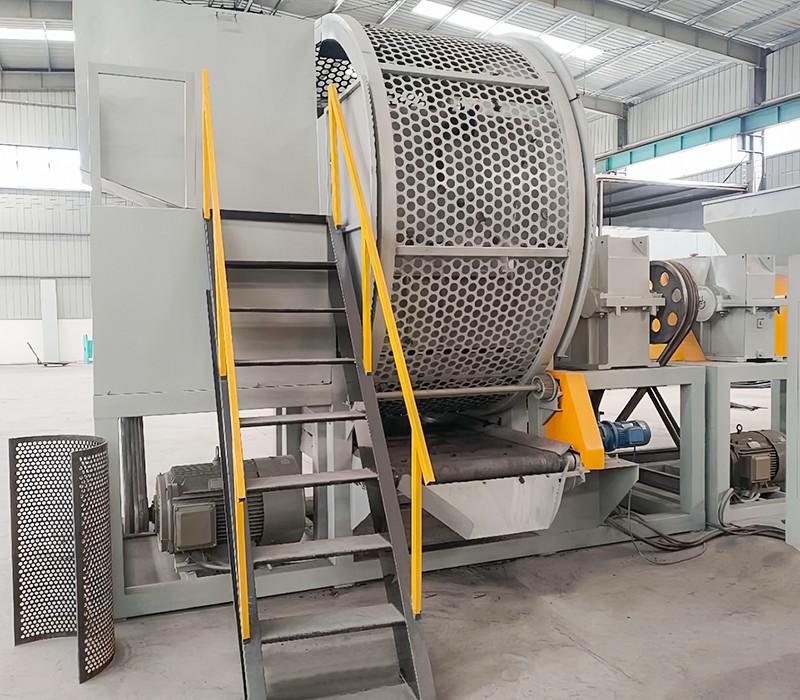
Industrial tire shredders share a core set of components that work together to cut, shear, and tear tires. These include the feed hopper, cutting chamber with rotor and knives, counter-rotating shafts or single high-torque shaft, drive system (gears, motors, and reducers), discharge conveyor, and material separation systems. Control panels, hydraulic actuators for gap adjustment, and safety interlocks are also integral. Each component influences performance: rotor design governs cut pattern and particle size, while the drive system determines torque and reliability under load.
Tire shredders employ mechanical shearing and tearing rather than simple slicing. Common mechanisms include single-shaft rotary cutters, dual-shaft shredders, and granulators. A single-shaft shredder uses a rotor with replaceable blades that compress and shear material against a fixed screen or counter knives. Dual-shaft machines use two counter-rotating shafts with intermeshing knives that grab and rip tires apart. Granulators often follow shredders to further reduce material to crumb sizes using high-speed knives and sizing screens.
A typical tire shredding process has discrete stages: intake and pre-sorting, primary shredding, secondary size reduction, magnetic separation, and final screening. Tires are inspected and large contaminants removed at intake. Primary shredders reduce whole tires to 50–300 mm fragments. Secondary granulators and screens further size the material to the target specification. Magnetic separators remove steel belts and bead wires; air classifiers or vibratory screens separate fiber and fines.
Shredding tires requires high starting torque and sustained power. Electric motors paired with industrial gear reducers or hydraulic drives are common. Gearboxes translate motor speed into the slow, high-torque rotation needed to shear rubber and break steel belts. Modern systems include torque-limiting couplings and intelligent drive controls to detect overloads and reverse or stall to prevent damage. Choosing the right motor rating and gearbox ratio is essential for reliable operation and economical energy use.
Final product size is controlled by a combination of knife spacing, rotor speed, and screening. Primary shredders produce coarse chips; granulators refine those chips to crumb sizes between 0.5–10 mm depending on application. Screens (or sizing grates) under the rotor allow particles smaller than the openings to pass while larger pieces remain for further cutting. Magnetic drum separators extract steel; air classification and centrifugal sifters remove fiber and dust, improving crumb purity for high-value applications.
Safety is critical around shredders due to moving parts and potential ejection of metal. Emergency stops, lockout-tagout procedures, feed hopper guards, and interlocked access doors are standard. Maintenance schedules should include routine knife inspection, bearing lubrication, gearbox oil checks, and vibration monitoring. Blade rotation direction checks and timely replacement of worn knives preserve cutting quality and energy efficiency. Train operators on safe feeding practices and hazard recognition.
Use the table below to match shredder types to common recycling applications and expected output ranges.
| Shredder Type | Typical Output | Best Use |
| Single-shaft | Coarse chips, 50–300 mm | Primary reduction for high-throughput plants |
| Dual-shaft (twin-shaft) | Medium chips, 20–150 mm | Flexible feed, tough tires, mixed feedstock |
| Granulator | Fine crumb, 0.5–10 mm | Final sizing for crumb rubber products |
In summary, tire shredders combine engineered cutting geometry, robust drive systems, and careful material handling to transform waste tires into usable industrial feedstock. Selecting the right shredder type, maintaining knives and drives, and integrating effective separation systems are the practical keys to a high-performing tire recycling operation.






Let's Pyrolysis!


 +44 7529 150720
  [email protected]
  300 meters east of the South Railway Station in Shangqiu City, Henan Province
  Global Waste-to-Energy Solutions Waste Resource Utilization Equipment Manufacturer

 Profit Calculator
 English
 русский
 Français
 Español
 عربى
عربى