
 5 minutes
Content
Every year, more than 1.5 billion waste tyres are discarded worldwide, creating one of the most persistent environmental challenges of the modern era. These tyres are non-biodegradable, meaning they remain in landfills or open dumping sites for decades, leaching harmful chemicals and fueling uncontrolled fires. The good news is that pyrolysis of tires offers a proven, commercially viable solution — one that converts this waste stream into profitable, high-value products.
Waste tyre pyrolysis is rapidly gaining momentum globally, driven by tightening environmental regulations, rising fuel prices, and growing investor appetite for circular economy projects. Governments and private enterprises alike are investing in waste tyre pyrolysis plants to not only address the disposal crisis but also unlock the economic potential locked inside scrap rubber.
Tyre pyrolysis is a thermochemical decomposition process that breaks down waste rubber in an oxygen-free (anaerobic) environment at controlled high temperatures — typically above 300°C. Because no oxygen is present, combustion cannot occur. Instead, the rubber's complex polymer chains crack into smaller molecules, producing a range of useful outputs.
The primary products of the pyrolysis of tires include:
This closed-loop material recovery means that virtually 100% of the waste tyre is utilized — nothing goes to landfill.
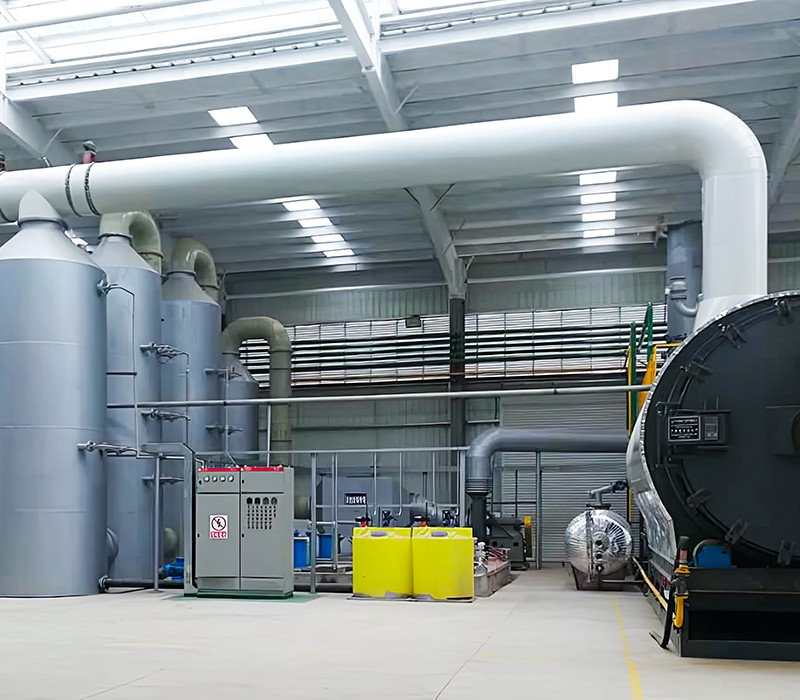
A modern waste tyre pyrolysis plant is an integrated system of pre-treatment, thermal conversion, condensation, and by-product handling. Understanding each stage is essential for investors and operators evaluating plant configurations.
Whole tyres are first processed by a tyre shredder, reducing them to 3–5 cm rubber particles suitable for reactor feeding. Some advanced technologies — such as certain rotary kiln designs — can accept whole tyres directly, eliminating the shredding step and reducing energy consumption. Shredded material is then conveyed through a sealed feed system into the pyrolysis reactor, with nitrogen used to purge oxygen and maintain an inert atmosphere.
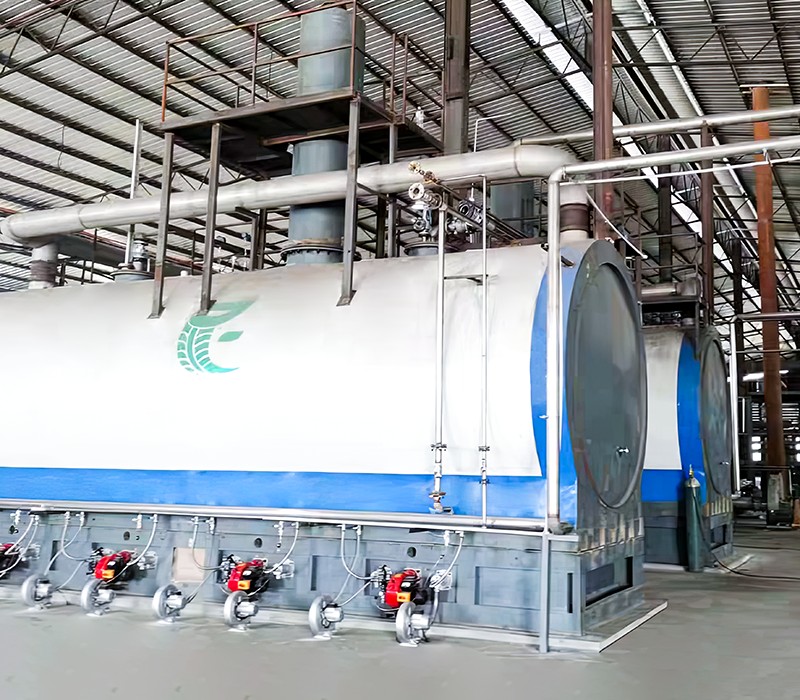
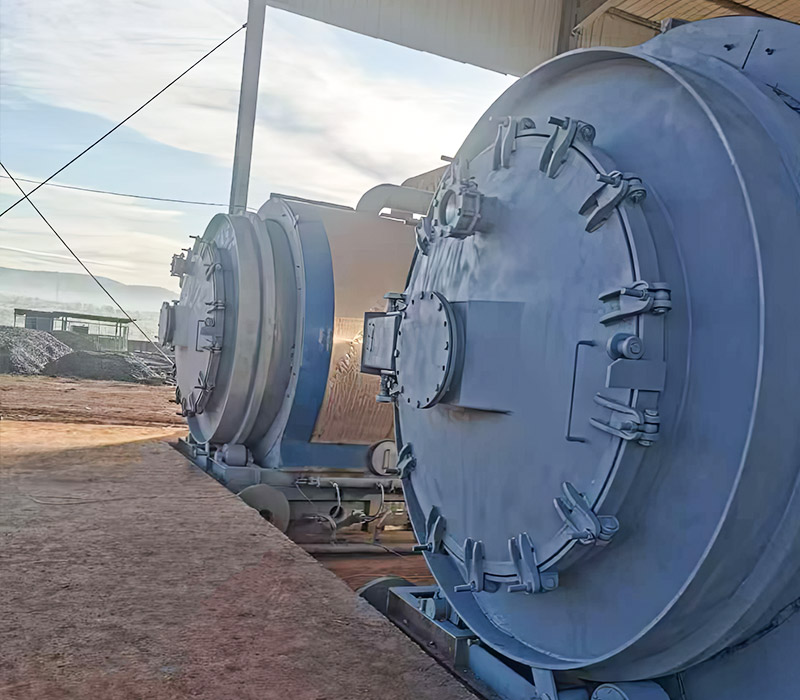
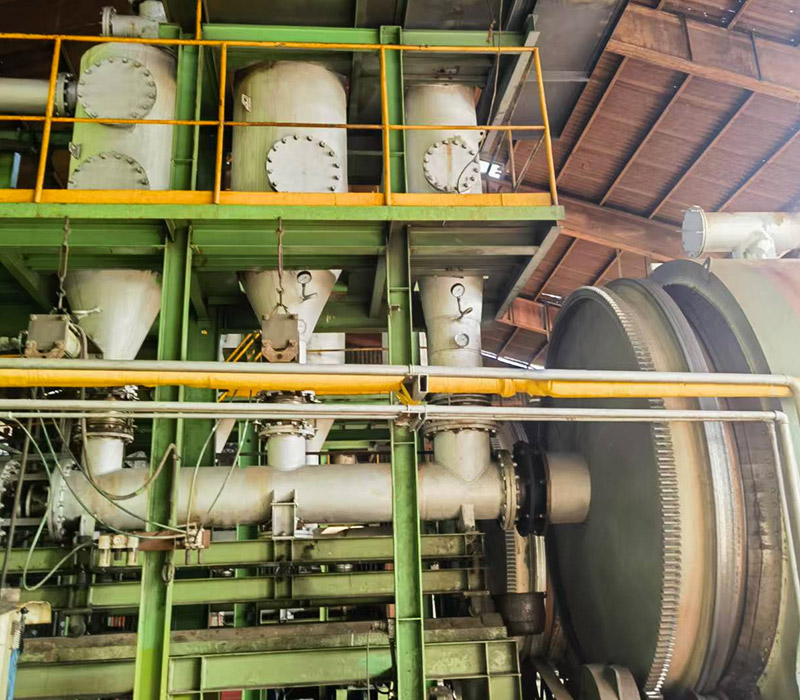
Inside the reactor — heated by fuel oil, LPG, or recycled pyrolysis gas — rubber particles undergo thermal cracking at temperatures above 300°C. Rotating reactor designs ensure uniform heating and efficient decomposition. Oil vapors rise and are directed through a condensation system, converting them to liquid pyrolysis oil collected in storage tanks. Non-condensable gases are returned to the burner, recycling energy and cutting fuel consumption by up to 55%.
Solid carbon black is discharged through a water-cooled system to rapidly lower its temperature before collection. Steel wire is separated using magnetic systems and packaged for resale. Advanced PLC control systems manage the entire discharge cycle automatically, reducing labor requirements and ensuring consistent product quality.
Compliant plants treat all waste flue gases before discharge. Modern systems achieve emission standards comparable to EU requirements by combining catalytic treatment, secondary combustion chambers, and advanced scrubbing. Sealed reactor designs prevent VOC leakage and dust emissions during operation.
Selecting the right pyrolysis machine type is one of the most critical investment decisions. The two main configurations differ significantly in capacity, automation, operating cost, and output quality.
| Feature | Batch Pyrolysis Plant | Continuous Pyrolysis Plant |
|---|---|---|
| Daily Capacity | Up to 12 tonnes/day | 10–100 tonnes/day |
| Operation Mode | 16–20 hours per cycle, stops between batches | Non-stop, 30–45+ days continuous |
| Labor Cost | Higher | Lower (PLC automated) |
| Capital Investment | Lower entry cost | Higher upfront, lower operating cost |
| Output Quality | Generally higher purity per batch | Consistent, stable yield |
| Best For | Small-scale operators, pilot projects | Large-scale commercial operations |
The industry trend is clearly shifting toward continuous pyrolysis plants. Driven by growing waste tyre volumes, regulatory pressure, and the economics of scale, continuous systems are becoming the standard for new commercial installations. A single continuous unit processing 30 tonnes per day can handle approximately 10,000 tonnes of waste tyres annually, generating consistent revenue from oil, carbon black, and steel wire sales.
Tyre pyrolysis oil (TPO) is arguably the most commercially important product of the pyrolysis process. With a high heating value of approximately 10,592 kcal/kg, TPO is directly competitive with conventional heavy fuel oil and finds application across multiple industries:

The tyre pyrolysis sector is entering a phase of rapid commercial maturation. Several high-profile developments signal growing confidence from both the private sector and major tire manufacturers:
The environmental case for waste tyre pyrolysis plants is compelling. Unlike open-air burning or landfilling — both of which release toxic compounds including dioxins, heavy metals, and polycyclic aromatic hydrocarbons — pyrolysis conducts decomposition in a sealed, controlled environment. Key environmental advantages include:
For entrepreneurs and industrial investors evaluating a waste tyre pyrolysis plant, the following factors are critical to project success:
A reliable and consistent supply of waste tyres is foundational. Continuous plants processing 50–100 tonnes per day require organized collection networks, logistics infrastructure, and supplier agreements. Some regions provide subsidies or raw material support as part of broader waste management policy.
Pyrolysis is classified as a chemical processing project in most jurisdictions and requires environmental permits, emissions compliance certification, and in some regions, specific waste processing licenses. Compliance timelines should be factored into project planning from day one.
Equipment quality directly determines output yield, uptime, and long-term profitability. Investors should prioritize ISO and CE-certified pyrolysis machines with proven commercial references, advanced PLC automation, and documented emission compliance. Customization options — including capacity, feed type, and product offtake configurations — allow plants to be tailored to specific market conditions.
Revenue is generated from four simultaneous product streams: pyrolysis oil, carbon black, steel wire, and combustible gas (used internally to reduce operating costs). The combination of abundant low-cost feedstock, multiple saleable outputs, and rising demand for sustainable fuel and recovered materials creates a favorable ROI profile, particularly for continuous-type plants operating at scale.
The next frontier for tyre pyrolysis is not merely energy recovery, but full material circularity. Leading research programs are working to refine pyrolysis oil into chemical monomers — including butadiene and styrene — that can be used directly to manufacture new tyres. Similarly, recovered carbon black is being upgraded to performance grades that meet or exceed virgin specifications, reducing the industry's dependence on fossil-derived inputs.
As environmental standards tighten, carbon pricing expands, and ESG requirements deepen across supply chains, the economic and strategic case for waste tyre pyrolysis plants will only strengthen. What was once a niche waste treatment technology is rapidly becoming a cornerstone of the global circular economy in rubber and advanced materials.






Let's Pyrolysis!


 +44 7529 150720
  [email protected]
  300 meters east of the South Railway Station in Shangqiu City, Henan Province
  Global Waste-to-Energy Solutions Waste Resource Utilization Equipment Manufacturer

 Profit Calculator
 English
 русский
 Français
 Español
 عربى
عربى