
 10 minutes
With the widespread application of pyrolysis technology in the fields of waste treatment and energy recovery, the safety of pyrolysis products has received increasing attention. Whether it is pyrolysis oil, pyrolysis gas or solid carbon black, they all involve potential safety risks in their applications. Therefore, it is particularly important to conduct a comprehensive safety assessment. This article will discuss in detail the safety assessment of pyrolysis products, including physical and chemical properties, environmental impact, storage and transportation safety, etc., to ensure that the products are safe and reliable during use and circulation.
Basic properties and risk analysis of pyrolysis products
Pyrolysis products mainly include pyrolysis oil, pyrolysis gas and solid carbon black. These products have their own chemical properties, and different properties determine their safety risk assessment methods:
Pyrolysis oil: Pyrolysis oil is a complex mixture containing a variety of organic compounds, which is flammable and potentially chemically reactive. Because it contains a small amount of volatile organic compounds (VOCs), it may cause explosions or fires under inappropriate temperature or pressure conditions. Therefore, it is crucial to conduct volatility testing and flash point analysis of pyrolysis oil to determine its storage and transportation requirements.
Pyrolysis gas: Pyrolysis gas is mainly composed of combustible gases such as hydrogen, carbon monoxide, and methane, which are highly flammable and explosive. The safety assessment of pyrolysis gas needs to pay special attention to its explosion limit range and gas leakage risk to ensure that there is no danger during use. If necessary, a gas detection device should be equipped to monitor the gas concentration in the environment in real time.
Solid carbon black: Although carbon black is relatively stable, its particles are small and easy to form dust, which may cause dust explosions. In addition, carbon black may also contain a certain amount of heavy metals or other harmful impurities, and environmental toxicity testing is required to ensure its safety in application.
(1) Safety assessment of pyrolysis oil
Physical and chemical property testing: First, a comprehensive analysis of the physical and chemical properties of pyrolysis oil is required, including parameters such as density, viscosity, flash point, ignition point, and corrosiveness. These data help determine the safety measures for pyrolysis oil in storage and transportation. For example, pyrolysis oil with a low flash point needs to use fireproof and explosion-proof storage tanks and be kept away from fire sources.
Toxicity test: Pyrolysis oil may contain harmful substances such as polycyclic aromatic hydrocarbons (PAHs), so toxicity tests are required to evaluate its impact on the human body and the environment. This includes acute toxicity, chronic toxicity and potential carcinogenicity to ensure that it does not pose a threat to health in actual use.
Volatile organic compound analysis: Detect the VOCs content in pyrolysis oil and evaluate its impact on air quality. If necessary, take measures to reduce the release of volatile organic compounds and reduce the risk of environmental pollution.
(2) Safety assessment of pyrolysis gas
Explosion limit test: The explosion limit range of pyrolysis gas is an important indicator for safety assessment. By testing the flammability of the gas at different concentrations, corresponding safety operating procedures are formulated. For example, when handling and storing pyrolysis gas, the ambient gas concentration must be kept within a safe range to avoid the formation of explosive mixed gases.
Gas leak detection and protection: Since pyrolysis gas contains flammable and toxic components, once leaked, it may cause serious harm to personnel and the environment. Therefore, it is necessary to install a gas leak detection system to promptly alarm and initiate emergency treatment measures. In addition, ventilation and isolation equipment should be provided to prevent gas accumulation in confined spaces.
Storage and transportation safety: Pyrolysis gas is usually stored in high-pressure gaseous or liquefied form, and high-strength and high-sealing storage equipment is required to prevent leakage or explosion. During transportation, relevant dangerous goods transportation regulations must be followed to ensure safety.
(3) Safety assessment of solid carbon black
Dust explosion risk analysis: Carbon black is prone to generate dust during processing and use. Once these dusts are suspended in the air and encounter a fire source, they may cause an explosion. Therefore, it is necessary to evaluate the explosive parameters of carbon black, including minimum ignition energy, explosion limit and dust concentration. In addition, dust prevention measures must be taken in the production and storage environment, such as installing a dust removal system and maintaining good ventilation.
Environmental toxicity test: Carbon black may contain a small amount of heavy metals or other harmful substances, which pose a potential threat to the environment and ecosystem. Therefore, an environmental toxicity assessment should be conducted to determine its safe disposal method to reduce environmental pollution.
Personnel protection and health assessment: Since carbon black particles are extremely small, they are easily inhaled into the respiratory tract, and long-term contact may be harmful to health. For this reason, workers should wear dust masks and goggles when handling carbon black, and conduct regular health monitoring to ensure safe operation.
(4) Environmental impact assessment
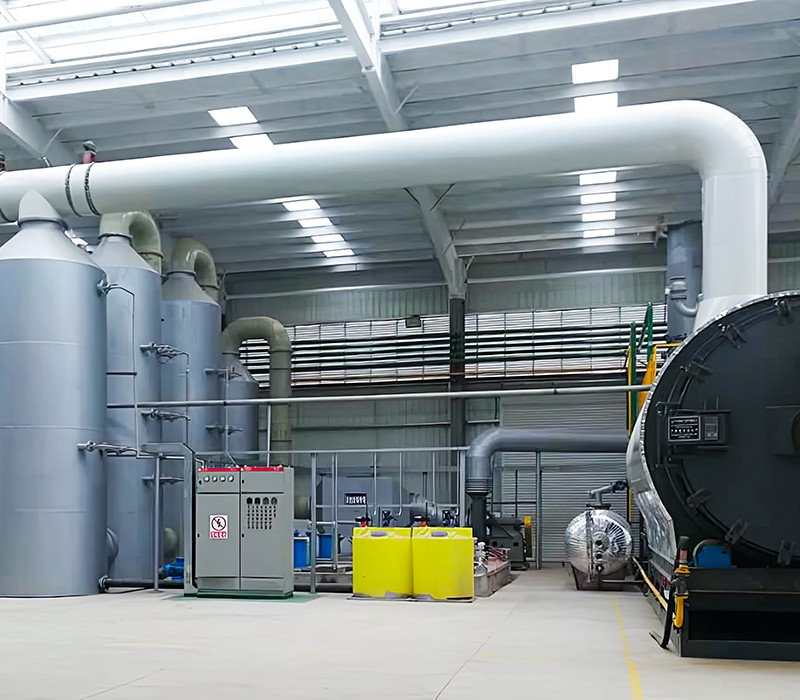
In addition to evaluating the safety of the product itself, the impact of the pyrolysis process on the environment is also an important consideration. Waste gas emissions, water pollution and solid residue disposal are all issues that need attention. By installing waste gas purification devices and sewage treatment systems, the negative impact on the environment can be reduced. In addition, solid residues should be harmlessly treated to avoid secondary pollution.
Emergency response and safety management
In order to prevent the occurrence of sudden accidents, a sound emergency response mechanism and safety management system must be established. For example, formulate emergency response plans for fires, leaks, explosions and other emergencies, and conduct regular drills to improve the emergency response capabilities of personnel. At the same time, pyrolysis equipment should be regularly maintained and inspected to ensure that all safety facilities are in good condition.
Conclusion
The safety assessment of pyrolysis products involves many aspects, including physical and chemical properties, toxicity analysis, environmental impact, and storage and transportation requirements. Only through strict safety testing and scientific management measures can the safety of pyrolysis products during use and circulation be ensured. In the future, with the continuous development of pyrolysis technology, safety assessment standards and measures will be further improved to provide strong guarantees for the sustainable development of the pyrolysis industry.






Let's Pyrolysis!


 +44 7529 150720
  [email protected]
  300 meters east of the South Railway Station in Shangqiu City, Henan Province
  Global Waste-to-Energy Solutions Waste Resource Utilization Equipment Manufacturer

 Profit Calculator
 English
 русский
 Français
 Español
 عربى
عربى