
 5 minutes
Content
Rice husks piling up at a grain mill. Sawdust accumulating at a timber yard. Corn stalks left in a field after harvest. Each of these materials represents a disposal problem — and, increasingly, a missed economic opportunity. Biochar pyrolysis equipment converts this agricultural and forestry biomass into a stable, carbon-rich solid with documented commercial and environmental value.
Biochar is produced when organic biomass is heated in an oxygen-limited environment, a process called pyrolysis. The result is a porous, carbon-rich material that can persist in soil for centuries. According to the USDA, biochar applications include improving soil structure, raising soil pH, remediating contaminated land, and sequestering atmospheric carbon over long timeframes — making it relevant not just to agricultural producers but to industrial operators seeking carbon credits and ESG-aligned waste solutions. Understanding the equipment that makes this possible is the first step toward evaluating whether a biochar production project is viable for your operation.
Biochar pyrolysis equipment is not a single machine but a system. The full production line typically consists of four stages working in sequence, each essential to consistent output quality.
Feedstock preparation. Raw biomass must be reduced to a manageable particle size — generally 5 to 20 mm — and dried to a moisture content below 15% before entering the reactor. Oversized or excessively wet material causes feed jams, uneven carbonization, and reduced biochar yield. Pre-treatment typically involves a shredder or crusher followed by a dryer, often integrated into the equipment system.
Pyrolysis reactor. The core of the system. Prepared biomass enters a sealed, oxygen-deficient chamber where it is heated — typically between 300°C and 700°C for biochar-optimized production — causing thermal decomposition. Without combustion oxygen present, the carbon-rich solid fraction remains as biochar rather than burning away. The reactor design (rotary kiln, screw conveyor, or fixed-bed) determines throughput capacity, temperature control precision, and maintenance requirements.
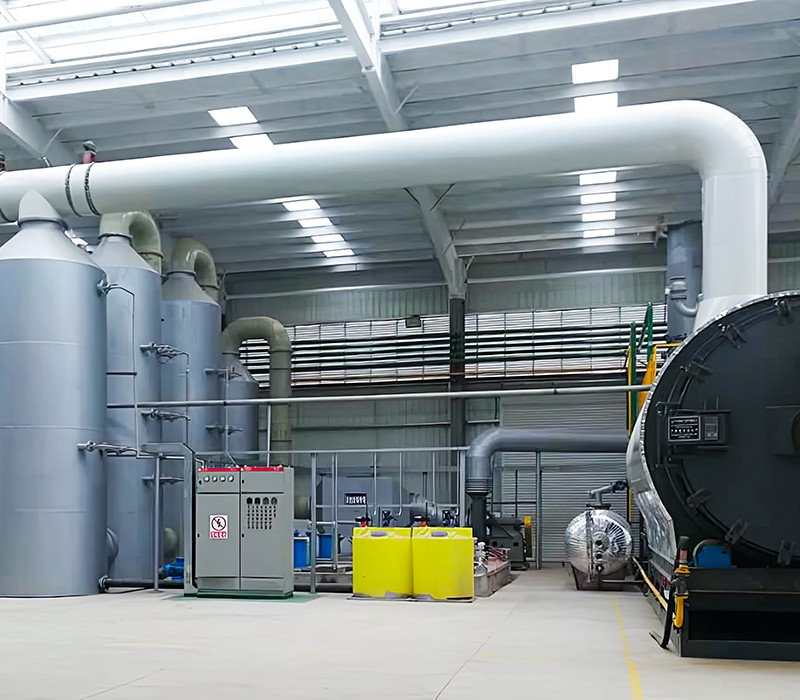
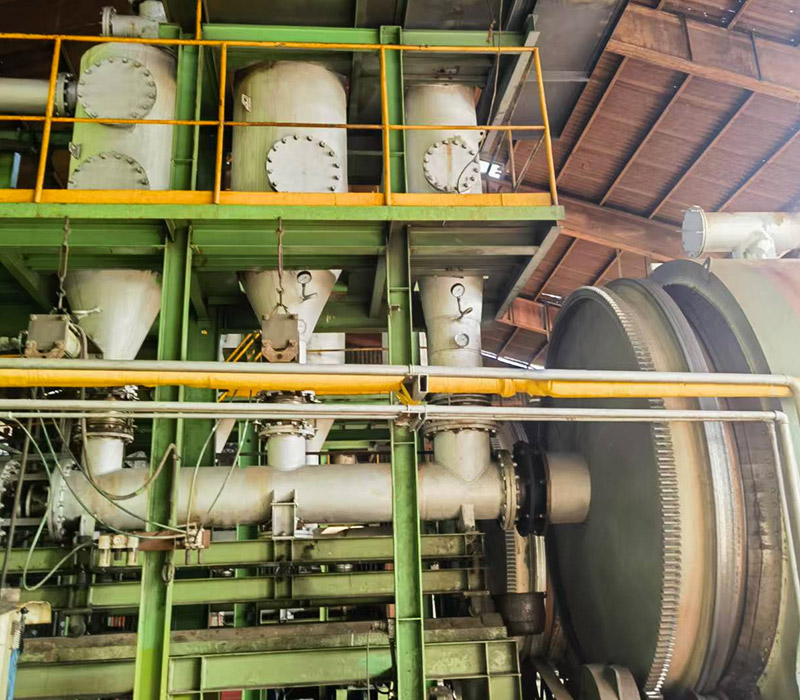
Gas and by-product handling. Pyrolysis produces volatile gases — primarily combustible syngas — along with condensable liquids such as wood vinegar and bio-oil. In well-designed systems, these gases are captured and recirculated as fuel to heat the reactor, reducing or eliminating the need for external energy input. This energy self-sufficiency is a defining economic advantage of modern biochar pyrolysis systems.
Biochar cooling and discharge. Freshly produced biochar exits the reactor at high temperature and must be cooled in a sealed environment to prevent re-oxidation. Once cooled, it is discharged and can be packaged, blended, or stored for downstream use.
The most important equipment decision for any biochar project is whether to use a batch or continuous system. The two approaches differ fundamentally in operation, scale economics, and capital requirements.
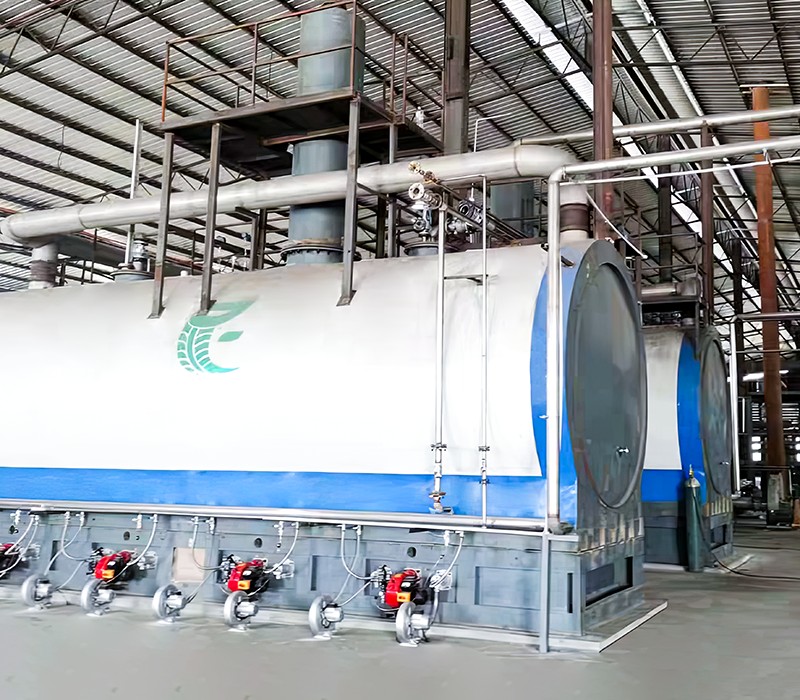
Batch pyrolysis equipment processes one load at a time. Biomass is loaded into the reactor, pyrolyzed, cooled, and discharged before the next cycle begins. This intermittent operation makes batch systems simpler to build, easier to maintain, and more accessible for smaller operations or projects processing diverse feedstocks. Temperature can be precisely controlled for each batch, which is particularly valuable when optimizing for biochar quality metrics. The biomass-to-biochar batch reactor designed for agricultural residues operates in the 350–500°C slow pyrolysis range to maximize biochar yield at 30–35% by weight — with flue gas recirculation cutting external fuel consumption significantly versus conventional kiln designs. The broader batch pyrolysis equipment range covers a range of feedstocks and capacity configurations for different project scales.
Continuous pyrolysis equipment accepts feedstock and discharges biochar in an uninterrupted flow, without shutdown between loads. This architecture enables higher throughput, better thermal efficiency, and lower labor cost per ton of output — advantages that become decisive at commercial scale. Continuous systems are suited to operations processing consistent feedstock streams where capacity targets exceed what intermittent batch cycling can achieve. The continuous pyrolysis equipment series supports 24-hour production with automated controls that monitor temperature, pressure, and feed rate throughout the process.
Neither system is universally superior. Batch equipment wins on flexibility and entry cost; continuous equipment wins on throughput and long-run economics. The decision should follow from your daily input capacity, feedstock consistency, and whether the project is a first-phase pilot or a full commercial deployment.
Biochar is the primary product, but it is not the only one. Understanding all outputs helps build a more complete picture of project economics.
| Output | Typical Yield | Primary Applications | Notes |
|---|---|---|---|
| Biochar | 25–35% (slow pyrolysis) | Soil amendment, carbon credits, water filtration, activated carbon production | Higher yield at lower temperatures (350–500°C); quality varies by feedstock and temperature |
| Syngas (pyrolysis gas) | 20–30% by weight | Self-heating of reactor; on-site power generation | Typically recirculated as fuel; eliminates need for external fuel after startup |
| Wood vinegar (bio-liquid) | ~50 kg per ton of biomass | Agricultural pesticide alternative, soil conditioner, food preservation, deodorant | Collected via condensation; commercial value varies by market and purity |
| Bio-oil / tar | Variable (higher at fast pyrolysis) | Energy recovery; further refining | Often not separately collected in biochar-optimized systems; recirculated or co-combusted |
Among all outputs, biochar carries the most diverse value channels. According to the USDA Climate Hubs biochar resource, biochar can improve plant growth in acidic and low-organic-matter soils, contribute to long-term carbon sequestration, and help remediate contaminated land — a range of applications that supports pricing across agricultural, environmental, and industrial markets. Carbon credit programs increasingly recognize biochar as a verified carbon removal pathway, adding a revenue stream that batch and continuous systems alike can access.
Not every biomass stream is immediately ready for pyrolysis. Feedstock characteristics directly affect equipment performance, biochar quality, and operational stability — making pre-treatment planning an essential part of project design.
Agricultural residues — rice husks, corn stalks, peanut shells, sunflower seed shells, straw — are among the most widely processed feedstocks. They are broadly compatible with both batch and continuous systems. Rice husk and corn cob in particular are favored for their low moisture content and good flowability. Crop stalks often require shredding before processing to achieve the 5–20 mm particle size range that ensures even heating and smooth screw conveying.
Forestry and wood-based biomass — sawdust, wood chips, bamboo, coconut shells — are high-carbon feedstocks that typically produce biochar with excellent pore structure and adsorption properties. Hardwood chars achieve higher fixed carbon content than agricultural residue chars at equivalent temperatures, making them better suited for activated carbon upgrading and industrial filtration applications.
Organic sludge and manure can be processed in biochar pyrolysis equipment, but they present challenges: higher moisture, lower carbon content, and potential contaminant loads. They require careful moisture management before processing and may produce biochar with lower carbon content than lignocellulosic feedstocks.
Key feedstock parameters that determine pyrolysis compatibility: moisture content (target below 15%), particle size uniformity, bulk density, and ash content. Feedstocks with poor flowability — such as fibrous palm residues — may need pelletization before entering screw-conveyor systems to prevent bridging and feed interruptions.
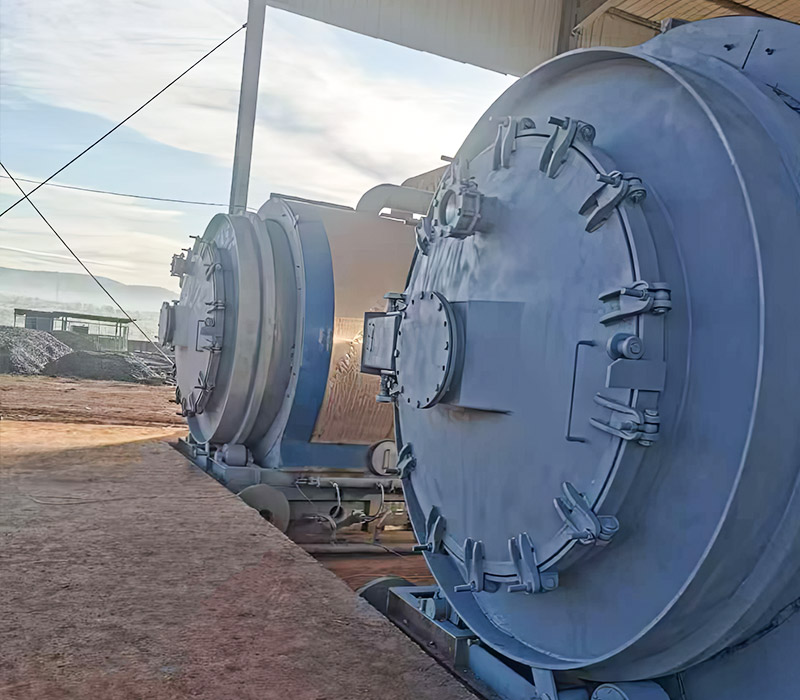
The equipment specification that suits one operation may be wrong for another. These are the questions that should shape any procurement decision.
What is your daily input volume? Batch systems typically handle 0.5 to 20 tonnes per cycle; continuous systems scale from a few tonnes to 50+ tonnes per day. Match system capacity to your sustained feedstock supply — not your peak volume — to avoid running equipment underutilized, which erodes the economics of continuous operation.
How consistent is your feedstock? Batch systems tolerate feedstock variability better than continuous ones. If you process multiple biomass types in rotation — seasonal agricultural residues, for instance — batch equipment gives you cycle-by-cycle flexibility to adjust temperature and residence time. Continuous systems reward stable, consistent feedstock streams.
What is your target biochar quality? Temperature control precision is the primary driver of biochar quality. Slow pyrolysis at 350–500°C maximizes biochar yield and produces material with high carbon content and strong soil amendment properties. Higher temperatures shift the product profile toward greater gas output. Confirm that the equipment you evaluate allows precise temperature programming across the full reactor length.
What environmental compliance requirements apply? Emissions from pyrolysis — particularly tail gas and particulate — are subject to local environmental standards in most markets. Evaluate whether the equipment includes integrated gas treatment, whether the supplier provides emissions data from operating installations, and whether the system design supports negative-pressure operation that prevents odor and gas leakage on site.
What after-sales support does the manufacturer provide? Pyrolysis equipment operates at high temperatures with rotating components, sealed gas systems, and continuous control automation. Installation commissioning, operator training, and access to spare parts are as important as the equipment specifications themselves. Confirm delivery timelines, assembly support, and the availability of maintenance documentation before committing to any supplier.







Let's Pyrolysis!


 +44 7529 150720
  [email protected]
  300 meters east of the South Railway Station in Shangqiu City, Henan Province
  Global Waste-to-Energy Solutions Waste Resource Utilization Equipment Manufacturer

 Profit Calculator
 English
 русский
 Français
 Español
 عربى
عربى