
 10 minutes
With the increasing global plastic pollution problem, finding efficient and environmentally friendly plastic recycling methods has become a key environmental issue. Traditional plastic recycling methods are mostly mechanical recycling, but due to the mixedness and pollution of plastics, many plastics cannot be efficiently reused. Pyrolysis technology, as a chemical recycling method, can decompose waste plastics into usable energy and chemical raw materials, providing a high-potential solution for plastic recycling.
1. Principle and process of plastic pyrolysis
Plastic pyrolysis is a process of decomposing plastics into gas, liquid and solid under high temperature and oxygen-free or anoxic conditions. The main component of plastic is hydrocarbons, which will break carbon-carbon bonds and carbon-hydrogen bonds at high temperatures to form small molecular hydrocarbon compounds. The final products of pyrolysis mainly include the following categories:
Pyrolysis oil: composed of liquid hydrocarbons, it is a high calorific value fuel that can be used to replace diesel or further refined.
Non-condensable gas: including gases such as hydrogen and methane, which can be used as energy for power generation or fuel purposes.
Carbon black: Carbon residue in plastics, suitable for making fillers or rubber products.
The process of plastic pyrolysis is usually divided into three stages:
Heating stage: At about 300°C, the plastic begins to soften and the molecular chain begins to break.
Pyrolysis stage: At high temperatures of 400°C-600°C, the decomposition reaction intensifies and a large number of small molecular hydrocarbons are generated.
Cooling and separation: The products are cooled and separated into different components. The gas can be used to heat the reactor, the liquid is collected as pyrolysis oil, and the solid is converted into carbon black or other application materials.
2. Advantages of plastic pyrolysis
Efficient resource recovery rate
Pyrolysis technology can effectively convert hydrocarbons in waste plastics into pyrolysis oil and non-condensable gas, realizing the resource utilization of waste. Compared with traditional landfill and incineration, pyrolysis not only reduces pollution to the environment, but also provides renewable fuels for the energy market.
Strong applicability
Pyrolysis technology is suitable for various plastics, especially those mixed plastics that are not suitable for mechanical recycling and heavily polluted plastics. Even for waste packaging, composite materials and multi-layer plastic films that are difficult to handle, pyrolysis technology can achieve efficient decomposition.
Reduce pollution
The pyrolysis process is carried out under anaerobic conditions, avoiding the generation of harmful gases (such as dioxins and sulfur dioxide). Compared with traditional incineration treatment, pyrolysis technology can significantly reduce the pollutant content of exhaust gas emissions and reduce the impact on air quality.
Energy self-sufficiency
The non-condensable gas produced during the pyrolysis process can be used to heat the reactor to form a self-circulating system, reduce dependence on external energy, and improve overall energy utilization.
3. Application scenarios of plastic pyrolysis technology
Recycling mixed plastics and contaminated plastics
In the case of lax garbage classification, the degree of contamination and mixing of plastics is high, making it difficult to recycle mechanically. Pyrolysis technology does not require strict sorting of plastics, and can handle a variety of plastic types (such as PE, PP, PS, etc.), which is suitable for the resource recovery of mixed plastics.
Produce fuel oil
Pyrolysis oil is a high calorific value liquid fuel that can be used as a diesel substitute or industrial fuel after further refining. The market demand for plastic pyrolysis oil is gradually increasing, especially in the fields of transportation and industrial fuel, becoming an environmentally friendly energy alternative.
Production of chemical raw materials
The gases and oils produced during the pyrolysis process can be further processed into petrochemical raw materials for the production of plastics, synthetic fibers and chemical products. Light hydrocarbons (such as ethylene and propylene) are important chemical raw materials suitable for the manufacture of new plastics and other high value-added chemical products.
Manufacturing carbon black
The solid residue carbon black generated during the pyrolysis process can be used to manufacture rubber, ink, coatings and other products, reducing the dependence on natural carbon black. This process not only reduces the solid waste emissions from plastic pyrolysis, but also provides added value for industrial applications.
4. Challenges of plastic pyrolysis technology
Unstable product quality
Different types of plastics and different process conditions can cause fluctuations in the quality of pyrolysis products. In particular, pyrolysis oil may contain more oxides and impurities, which need to be further refined and purified before it can be used as high-quality fuel or chemical raw materials.
Impact of high moisture and impurities
Plastic waste may contain impurities such as moisture, oil, and metal, which will affect the efficiency of the pyrolysis reaction and the purity of the product. The presence of moisture consumes additional energy for evaporation, and oil and metal may cause equipment wear or contaminate the product.
High technical cost
The design, construction and maintenance costs of pyrolysis devices are high, especially for large-scale chemical plant equipment and automation systems, which require large initial investments. The efficient operation of the pyrolysis process requires precise temperature control and catalyst support, which increases operating costs.
Waste gas emission issues
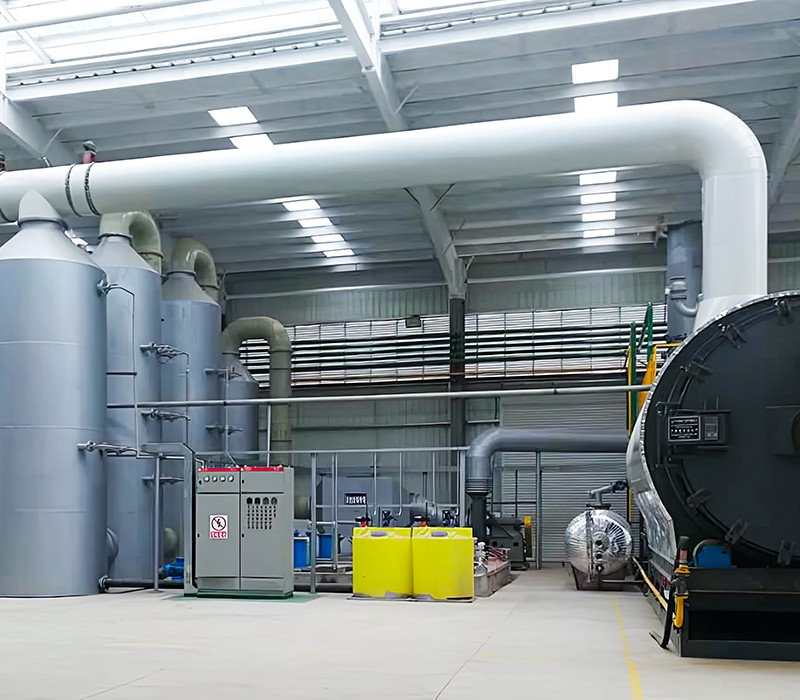
Although pyrolysis greatly reduces the emission of harmful gases compared to incineration, non-condensable gases may still contain a small amount of pollutants (such as carbon monoxide, nitrogen oxides, etc.), so a complete tail gas treatment system is required to ensure that emissions meet standards.
5. Future development direction and prospects
Technological innovation and process optimization
In order to improve the product quality of plastic pyrolysis, more efficient catalysts need to be developed in the future to improve the purity of pyrolysis oil and gas. At the same time, through process optimization such as multi-stage pyrolysis and graded condensation, the recovery rate and quality of pyrolysis products can be further improved.
Promote small-scale distributed pyrolysis devices
For areas with small plastic waste production, small-scale distributed pyrolysis equipment can be promoted to achieve on-site treatment, reduce transportation costs and improve resource utilization efficiency. Small-scale pyrolysis devices are particularly suitable for community recycling centers and industrial parks.
Development of circular economy and policy support
Promoting the promotion of plastic pyrolysis technology requires the government to introduce supporting policies, such as subsidies, tax incentives and market incentives. By establishing a complete industrial chain for plastic recycling and resource utilization, the circular economy of plastic resources can be promoted.
Promote the market application of products
Promote the market application of pyrolysis products such as pyrolysis oil and carbon black, develop their demand in the fields of fuel, chemical raw materials, soil conditioners, etc., expand the market value of pyrolysis products, and achieve dual benefits of economy and environmental protection.
Plastic pyrolysis technology provides a feasible and efficient path for plastic recycling. Through pyrolysis, waste plastics are converted into high-value-added products such as fuel oil, chemical raw materials and industrial carbon black, which not only realizes the recycling of resources, but also provides a new development direction for the environmental protection industry. Although plastic pyrolysis still faces challenges such as technology, cost and policy in practical applications, with the advancement of technology and the improvement of environmental awareness, plastic pyrolysis is expected to become an important tool for plastic waste management and resource utilization in the future, and make positive contributions to addressing plastic pollution and promoting the development of a low-carbon economy.






Let's Pyrolysis!


 +44 7529 150720
  [email protected]
  300 meters east of the South Railway Station in Shangqiu City, Henan Province
  Global Waste-to-Energy Solutions Waste Resource Utilization Equipment Manufacturer

 Profit Calculator
 English
 русский
 Français
 Español
 عربى
عربى