

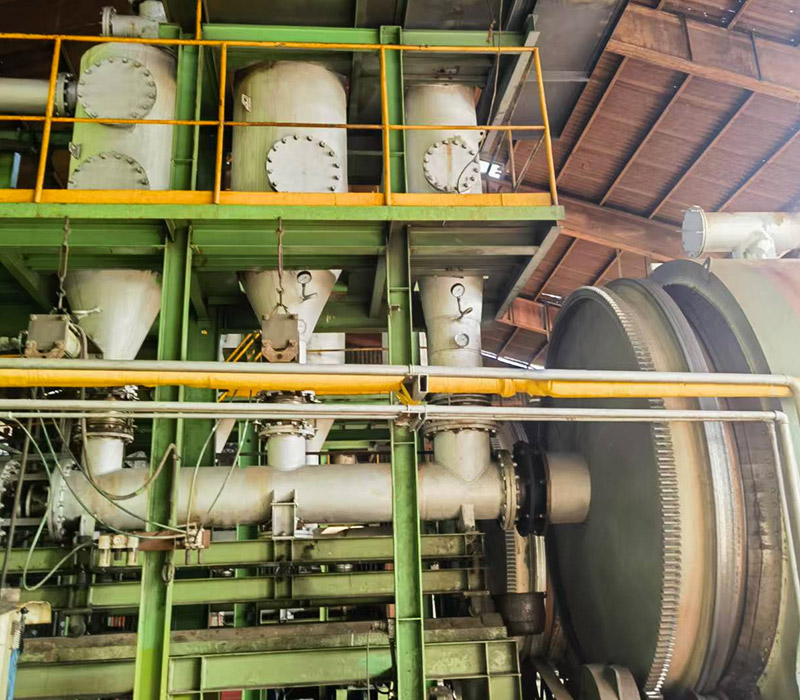
SHANGQIU, China — Jinpeng Industrial has completed the dispatch of four batch-type pyrolysis units purpose-built for the resource recovery of end-of-life photovoltaic (PV) modules. Once commissioned, the units will handle the large-scale delamination and material recovery of retired crystalline-silicon solar panels — helping build the processing capacity the world will need as the first major wave of decommissioned panels approaches.
————————————————————
Content
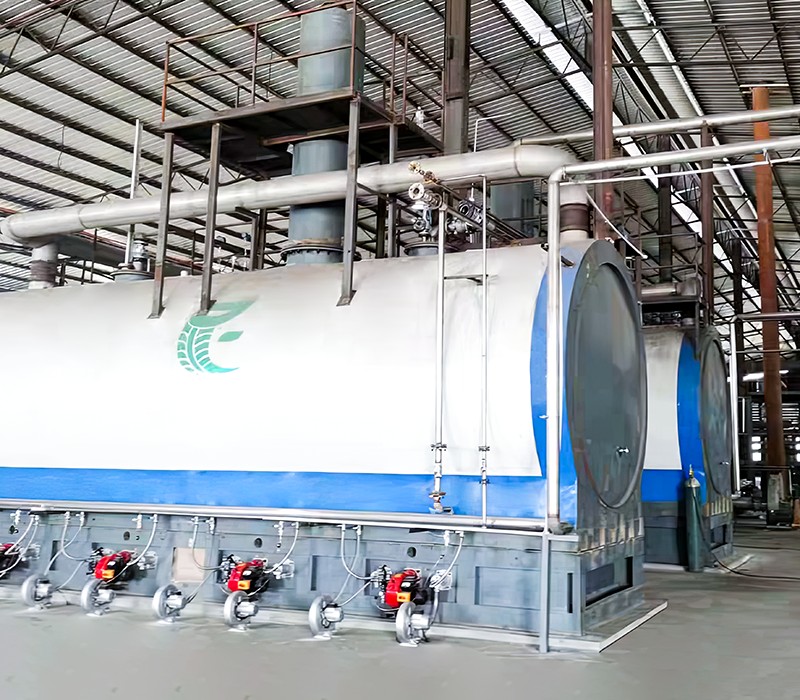
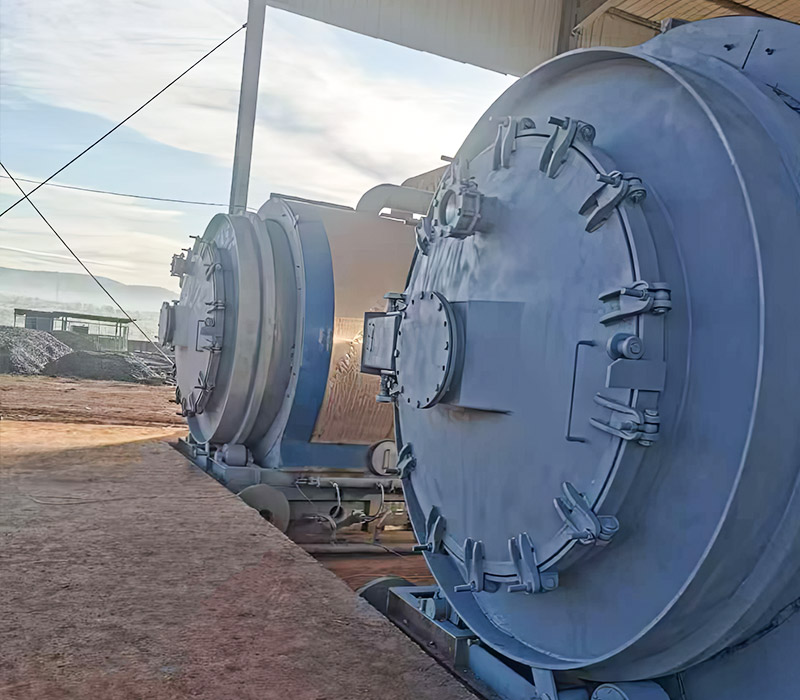
The four units dispatched are batch-type pyrolysis systems engineered by Jinpeng specifically for end-of-life PV module treatment. Deployed as a group and operated in batches, they deliver stable, schedulable throughput. In service, their core task is the pyrolytic separation of the encapsulant film inside retired crystalline-silicon modules — the key step that makes high-value material recovery possible.
Solar power has been the fastest-growing energy source of the past two decades, and every panel installed today will one day need to be retired. Placing dedicated treatment capacity into service now, ahead of the wave, is exactly the kind of forward planning the recycling sector requires.
To understand the value of these units, it helps to understand why an end-of-life solar panel is so difficult to recycle.
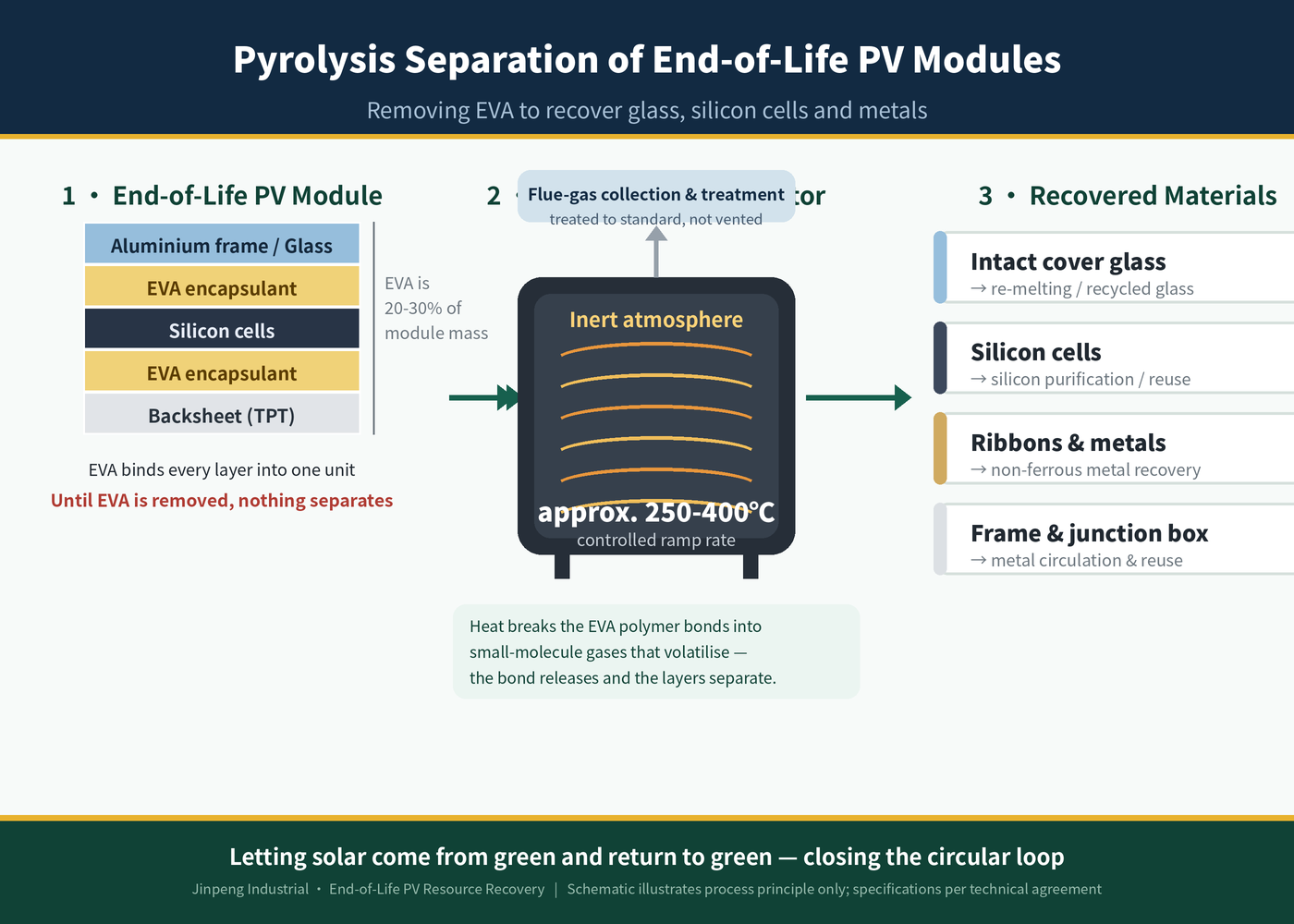
A typical crystalline-silicon module is a laminated sandwich: a tempered-glass cover, a layer of EVA (ethylene-vinyl acetate) encapsulant, the silicon cells, a second EVA layer, and a backsheet — all bound within an aluminium frame. Glass makes up roughly 70% of the module's weight and the aluminium frame and junction box about 10%, while the EVA encapsulant — though only 20–30% of the module's mass — is the single hardest obstacle on the road to recovery.
The problem lies in that encapsulant. During manufacturing, the EVA is melted, cross-linked and cured under heat and pressure, bonding the cells, glass and backsheet into one inseparable unit. As long as the EVA remains, the glass, silicon and metals cannot be separated — this is the central bottleneck of PV recycling.
Pyrolysis is a proven route through that bottleneck.
The principle: under an inert atmosphere and controlled heating, thermal energy breaks the molecular bonds of the EVA polymer, decomposing it into small-molecule gases that volatilise and are drawn off — gently releasing its bond. Once the EVA is removed, the previously laminated glass, cells and ribbons delaminate cleanly and move on to their respective recovery streams.
Compared with direct incineration, pyrolysis takes place in an oxygen-free or oxygen-deficient environment, avoiding the emission problems of simple burning. Compared with chemical-solvent methods, it requires no large volumes of organic solvents, making the process cleaner and far easier to scale. Done properly, it can yield largely intact glass and cells — preserving the higher material value needed for downstream glass re-melting, silicon purification and metal recovery.
Tailored to the material characteristics of PV modules, Jinpeng's units are built around three design priorities.
Process control. EVA pyrolysis is sensitive to temperature and to the rate of heating and cooling — ramp too fast, or let gas build up, and the glass can crack or the cells shatter, sometimes leaving carbon deposits on the substrate. The units are therefore centred on a stable, controllable thermal profile, aiming to remove the encapsulant while preserving the integrity of the glass and silicon, and with it their recovery value.
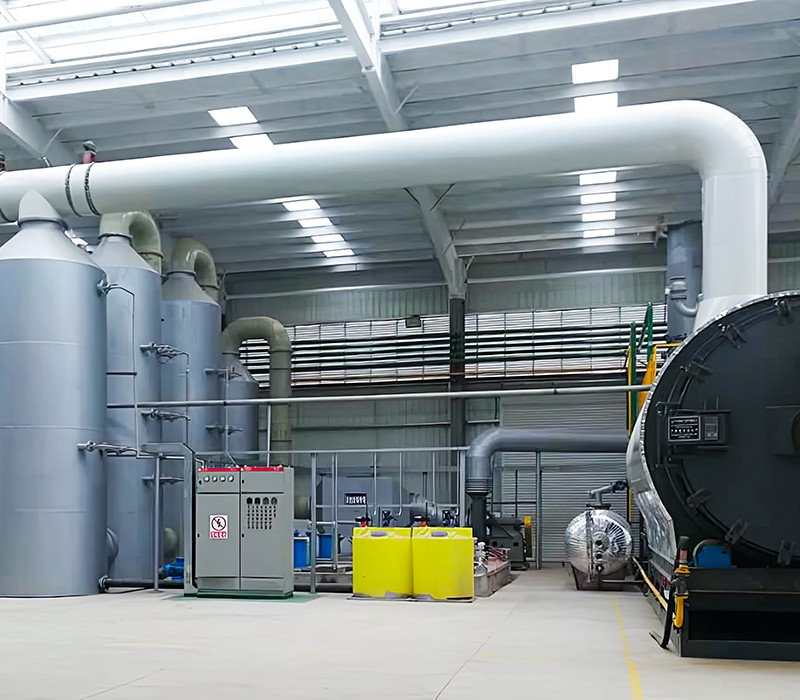
Controlled emissions. In keeping with Jinpeng's established environmental design, the units are paired with a flue-gas collection and treatment system, ensuring the gases released during pyrolysis are properly treated to meet emission standards rather than vented to the atmosphere. Environmental compliance is the precondition for any recycling project to operate — and the baseline for these units.
Grouped batch operation. Configured as a group of four and running in batches, the units can fire up according to incoming material, start and stop as needed, and together form dependable batch capacity — well matched to the phased, batch-wise way retired modules typically arrive, while giving operators predictable throughput and flexible scheduling.
As a participant in the drafting of industry standards for tire and plastic pyrolysis equipment, Jinpeng operates a provincial-level R&D platform and equips its full product range with ISO / CE-certified safety systems, handling more than 100 types of feedstock — waste tires, plastics, medical waste, municipal solid waste, oil sludge, biomass and more. Extending this mature pyrolysis technology to end-of-life PV treatment marks a further step into the resource-recycling arena.
Four units leaving the factory may look like a routine delivery. Behind it stands a challenge the whole world is beginning to face.
Solar deployment has grown at unprecedented rates since the early 2000s, and those early installations are now reaching the end of their roughly 30-year working life. According to projections by IRENA and the IEA-PVPS, large volumes of annual PV waste are anticipated from the early 2030s, and cumulative end-of-life PV panel material could reach as much as 78 million tonnes globally by 2050. If fully returned to the economy, the value of the recoverable material could exceed USD 15 billion by 2050 — most of it glass, silicon, aluminium and other valuable components.
That accumulating stock is, in effect, an above-ground mine. Whether it becomes an environmental burden or an economic opportunity depends on one thing: whether the world builds standardised, industrial-scale processing capacity in time.
The recycling of end-of-life solar modules sits at the heart of the circular-economy agenda now taking shape worldwide.
Regions are moving to put the groundwork in place. The European Union was the first to adopt PV-specific waste rules, requiring producers that supply panels to the EU market — wherever they are based — to finance the collection and recycling of end-of-life panels. Similar producer-responsibility thinking is spreading as governments, industry bodies and public–private partnerships prepare for the surge before it arrives.
The logic is the same everywhere: a solar module begins its life as a clean-energy asset and, at the end, becomes an object requiring clean disposal. Building the capacity to recover it is an indispensable link in the loop — letting solar come from green and return to green, completing its full life cycle responsibly.
Seen this way, the four units bound for their destination are more than four machines. They are a concrete addition to global end-of-life PV processing capacity, and a practical response by an equipment manufacturer to the shared goals of the circular economy and a net-zero future. When the retirement wave arrives on schedule, it is exactly this kind of steadily running treatment equipment that will uphold the promise solar made at the start — green, and sustainable, from beginning to end.
————————————————————
Jinpeng Industrial specialises in solid-waste resource recovery and environmental-equipment manufacturing, supplying pyrolysis, shredding and sorting, distillation and carbon-black refining solutions to customers worldwide in support of resource circularity and the low-carbon transition.
Note: PV waste-volume and material-value projections cited above are drawn from the joint IRENA / IEA-PVPS report "End-of-Life Management: Solar Photovoltaic Panels." Figures are directional estimates; refer to the original sources for full context. Equipment specifications are subject to the technical agreement of each project.






Let's Pyrolysis!


 +44 7529 150720
  [email protected]
  300 meters east of the South Railway Station in Shangqiu City, Henan Province
  Global Waste-to-Energy Solutions Waste Resource Utilization Equipment Manufacturer

 Profit Calculator
 English
 русский
 Français
 Español
 عربى
عربى