
 5 minutes
Pyrolysis technology, as an efficient waste treatment method, has gained significant attention for its ability to recycle organic materials such as plastic, tires, and biomass. During pyrolysis, these materials decompose at high temperatures in an oxygen-free environment, producing gases, liquids, and solids. While pyrolysis is effective at reducing waste volume and harmful emissions, harmful components are still released during the gasification process. Therefore, gas purification technology plays a vital role in ensuring the environmental compliance of the pyrolysis process. This article will explore the main gas purification technologies used in pyrolysis and their significance.
1. Characteristics of Pyrolysis Gases
During pyrolysis, raw materials decompose into gases that generally contain the following components:
● Harmful Gases: Such as nitrogen oxides (NOx), sulfur dioxide (SO2), volatile organic compounds (VOCs), and carbon monoxide (CO).
● Greenhouse Gases: Including methane (CH4) and carbon dioxide (CO2).
● Particulate Matter: These solid particles can contribute to environmental and air quality pollution.
Some of these gases are harmful to the environment and human health, which is why effective gas purification is necessary in the pyrolysis process.
2. Major Gas Purification Methods
● Acid-Base Neutralization
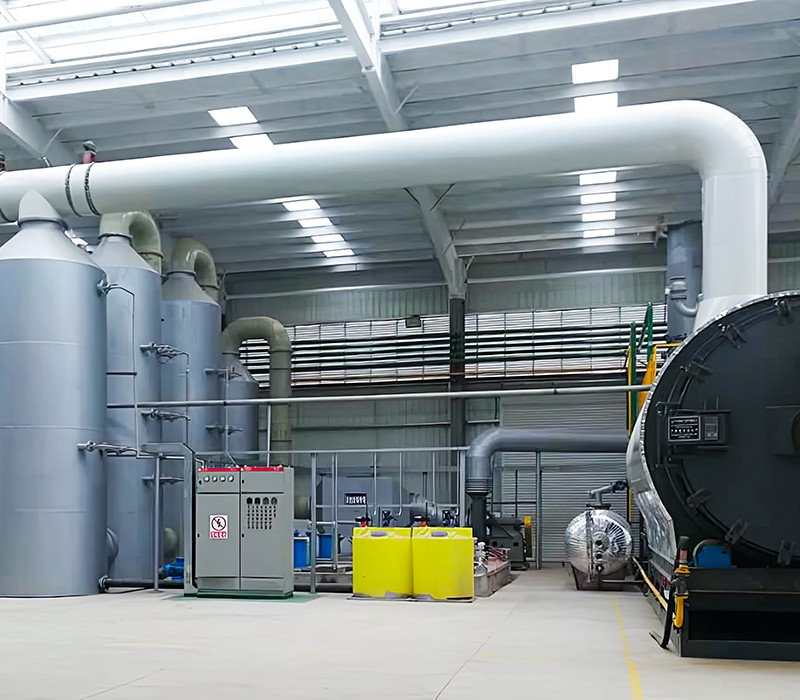
Acid-base neutralization is commonly used to remove acidic components like hydrogen chloride (HCl) and hydrogen sulfide (H2S). By spraying alkaline solutions (such as sodium hydroxide or calcium hydroxide) that react with the acidic gases, harmful compounds are converted into harmless salts, reducing acidity. Spray towers are commonly used in pyrolysis gas purification systems for this purpose.
● Adsorption
Adsorption uses activated carbon or other adsorbents to remove harmful substances from gases. Activated carbon, with its large surface area, effectively absorbs organic volatile compounds, heavy metals, and other pollutants. It is widely used in pyrolysis systems to remove harmful organic components from gases, ensuring clean emissions.
● Catalytic Oxidation
Catalytic oxidation involves using a catalyst to react organic compounds in the gas phase with oxygen, producing carbon dioxide and water. This method is especially effective at removing volatile organic compounds (VOCs). Common catalysts include metal oxides and precious metals.
● Condensation
Condensation is used to cool pyrolysis gases and separate the condensable components (such as water vapor and organic liquids) from the gas stream. By cooling the gas, most oils and acidic substances can be separated, improving the environmental performance of the gas emissions.
● Filtration
Filtration is used to remove solid particulates, such as soot and dust, from the gases. Common filtration devices include bag filters and electrostatic precipitators, which efficiently capture and remove particulate pollutants from the air, reducing the environmental impact of gas emissions.
3. Challenges and Future Directions in Gas Purification Technology
Despite significant progress in gas purification technologies, some challenges remain in their practical application:
● Energy Efficiency and Cost-Effectiveness
Efficient gas purification systems often come with high equipment investment and operating costs. Thus, reducing energy consumption and costs while ensuring purification performance is a key focus for the development of gas purification technologies.
● Coordinated Pollution Removal
Pyrolysis gases usually contain a mixture of pollutants, such as acidic gases, particulates, and volatile organic compounds. Developing effective methods to simultaneously remove these diverse pollutants remains a critical challenge in gas purification.
● Stricter Environmental Regulations
As environmental regulations become increasingly stringent, there are higher demands for low-emission and efficient gas purification methods. Gas purification technology must continuously evolve to meet these regulatory requirements.
4. Conclusion
Gas purification technology is critical in ensuring the environmentally responsible operation of pyrolysis systems. By effectively removing harmful gases, it enables pyrolysis to recycle waste efficiently while minimizing environmental impact. As technologies continue to innovate, gas purification will play an increasingly important role in ensuring the sustainability and effectiveness of pyrolysis, contributing to the global shift toward circular economies and waste-to-energy.






Let's Pyrolysis!


 +44 7529 150720
  [email protected]
  300 meters east of the South Railway Station in Shangqiu City, Henan Province
  Global Waste-to-Energy Solutions Waste Resource Utilization Equipment Manufacturer

 Profit Calculator
 English
 русский
 Français
 Español
 عربى
عربى